
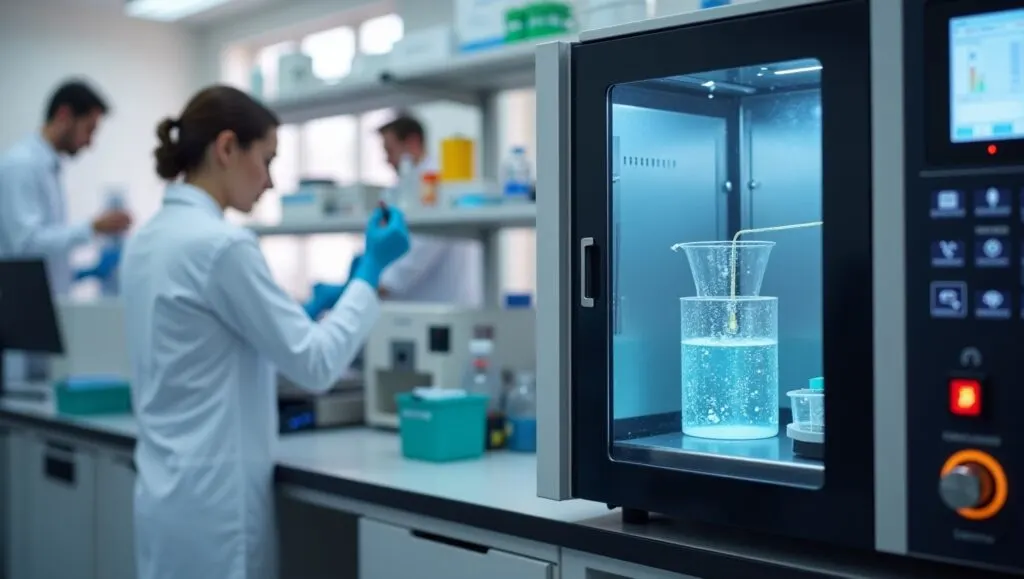
Whether you’re working in a research lab, industrial processing plant, or academic setting, homogenization, cell disruption, and nanoparticle dispersion are often essential to your workflow. One of the most efficient tools for these processes is the Probe Sonicator. But what exactly is a probe sonicator, and why is it so widely used in modern laboratories?
In this blog, we’ll cover everything you should know about Probe Sonicators—from how they work to their key applications and benefits. Let’s dive in.
What Is a Probe Sonicator?
A Probe Sonicator, also known as an ultrasonic homogenizer, is a powerful instrument that uses high-frequency ultrasonic energy to break apart particles, disrupt cells, and emulsify or disperse materials. It consists of a generator, converter, and probe (or horn), which transmits ultrasonic energy directly into the sample.
Unlike bath sonicators that apply sound waves more gently, a probe sonicator delivers focused energy to a small area—making it ideal for breaking up tough cell walls, nano-emulsions, or particle agglomerates.
How Does a Probe Sonicator Work?
The probe (typically made of titanium) vibrates at ultrasonic frequencies—usually in the range of 20 kHz to 40 kHz. This vibration creates microscopic cavitation bubbles in the sample liquid. When these bubbles collapse, they produce shock waves that result in intense mixing, shearing, and high local temperatures and pressures.
This ultrasonic cavitation is what gives probe sonicators their exceptional ability to homogenize and disrupt samples at the molecular level.
Key Features of a Probe Sonicator
Here are some of the defining features of modern probe sonicators:
- Adjustable amplitude for precise control over intensity
- Pulse mode for temperature-sensitive samples
- Digital display for real-time monitoring
- Programmable settings for repeatable processes
- Interchangeable probes to suit different volumes and applications

Applications of Probe Sonicators
The versatility of Probe Sonicators makes them invaluable in a wide range of industries and research fields:
1. Cell Disruption & Lysis
In microbiology and molecular biology, probe sonicators are commonly used to disrupt cell membranes to extract DNA, RNA, proteins, or enzymes.
2. Nano-Material Dispersion
In nanotechnology, probe sonication helps evenly disperse nanoparticles in liquid suspensions, preventing agglomeration.
3. Emulsification
In pharmaceutical and cosmetic industries, sonicators are used to create fine emulsions—essential for creams, lotions, and drug delivery systems.
4. Extraction of Bioactive Compounds
Used in food science and herbal extraction, ultrasonic energy helps release bioactive compounds like polyphenols and essential oils.
5. Cleaning & Degassing
Probe sonicators can also remove gas bubbles from liquids and clean narrow or hard-to-reach areas in small components.
Advantages of Using a Probe Sonicator
Why choose a probe sonicator over other homogenization methods? Here’s why:
- High energy efficiency for quick processing
- Minimal sample contamination
- User-friendly digital controls
- Precise, localized sonication
- Time-saving with reproducible results
Choosing the Right Probe Sonicator
When selecting a probe sonicator, consider the following:
- Sample volume (micro-liters to liters)
- Required amplitude and intensity
- Sample sensitivity to heat
- Type of material (cells, particles, etc.)
- Availability of cooling systems or accessories
Pro tip: For applications requiring temperature control, choose a unit with programmable pulse mode and cooling jacket compatibility.
Safety Tips While Using Probe Sonicators
Using a probe sonicator involves ultrasonic energy and potentially hazardous materials. Follow these safety precautions:
- Wear ear protection – ultrasonic waves can be harmful
- Always use proper sample containers
- Avoid touching the probe while active
- Use a sound enclosure in shared lab environments
- Monitor sample temperature to avoid overheating
Conclusion
A Probe Sonicator is an indispensable tool in modern laboratories, known for its versatility, speed, and high efficiency in homogenization, emulsification, and cell disruption. Whether you’re working in biotechnology, nanotechnology, or pharmaceuticals, this device can significantly streamline your workflow and enhance experimental consistency.
Ready to upgrade your lab’s capabilities? Explore our latest models of Probe Sonicators equipped with intelligent digital controls and advanced safety features.