

When setting up a safe and efficient laboratory, choosing the right fume hood is crucial. A laboratory fume hood isn’t just a piece of equipment—it’s your first line of defense against harmful fumes, vapors, and airborne particles. But with different types available, how do you know which one suits your lab best? Let’s explore the main types of lab fume hoods and help you make the right choice.
1. Ducted Fume Hood – Ideal for Heavy Chemical Use
A ducted fume hood is connected to an external ventilation system. It pulls hazardous air out of the lab through ductwork and releases it outdoors. These are best for:
- Labs handling strong acids, volatile chemicals, or radioactive substances.
- Facilities needing continuous air exchange for safety.
Pros:
- Offers superior protection from toxic fumes.
- Meets stringent safety standards (e.g., ANSI, OSHA).
Cons:
- Installation and maintenance are costlier due to ductwork.
- Not portable—once installed, it’s fixed.
For a deeper understanding of how fume hoods protect you, read our blog:
How Fume Hoods Protect You in the Laboratory
2. Ductless Fume Hood – Flexible and Cost-Effective
A ductless fume hood, also known as a recirculating fume hood, filters air through activated carbon or HEPA filters and returns clean air back into the lab. These are suitable for:
- Labs with limited space or no ducting options.
- Handling light chemicals or occasional use.
Pros:
- Easy to install—no external duct required.
- Portable and cost-efficient.
Cons:
- Not recommended for handling heavy corrosives or high volumes of volatile substances.
- Filter replacement is necessary and can be costly over time.
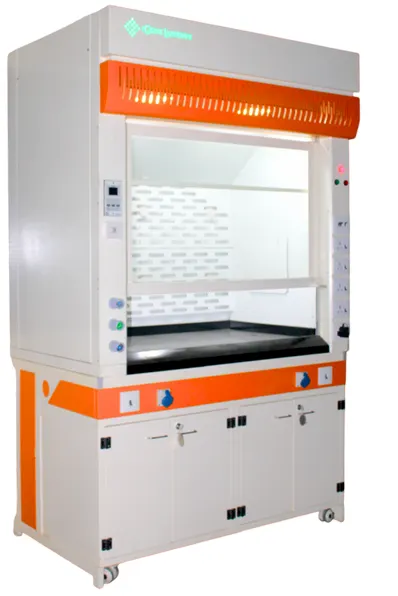
3. Canopy Fume Hood – Perfect for Heat and Steam Removal
Canopy hoods are ceiling-mounted and often found above equipment that emits steam, heat, or non-toxic odors—like autoclaves or acid baths. They are not for chemical-intensive work but serve well in specific applications.
Pros:
- Efficient at removing rising heat and moisture.
- Space-saving and versatile for certain setups.
Cons:
- Not ideal for trapping hazardous fumes.
- Limited containment capacity.
4. Specialized Fume Hoods – Custom for Unique Applications
Specialized lab fume hoods include:
- Perchloric Acid Fume Hoods (with wash-down systems to prevent explosive residue)
- Radioisotope Fume Hoods (lead-lined for radiation shielding)
- Biological Safety Cabinets (for working with pathogens)
These are tailored to handle specific hazards or regulatory requirements in pharmaceutical, academic, or industrial research labs.
Pros:
- Custom-built to meet precise safety needs.
- Comply with strict regulatory standards.
Cons:
- Higher cost due to customization.
- May require special training or infrastructure.
Final Thoughts: What’s Right for Your Lab?
Choosing the best laboratory fume hood depends on your workflow, chemicals in use, space constraints, and budget. Here’s a quick guide:
| Lab Type | Recommended Fume Hood |
|---|---|
| Chemistry Lab | Ducted Fume Hood |
| Teaching Lab or Light Use | Ductless Fume Hood |
| Industrial Area with Steam | Canopy Fume Hood |
| Specialized Research (Radioactive, Biological) | Specialized Fume Hoods |
Always ensure your fume hood complies with safety standards and is properly maintained. Whether you’re setting up a new lab or upgrading your equipment, investing in the right fume hood is essential for both safety and performance.
FAQs
01. What is a fume hood?
A fume hood is a ventilated enclosure used in laboratories to limit exposure to hazardous fumes, vapors, or dust by drawing air away from the user.
Q2. What is a fume hood used for in chemistry?
In chemistry labs, fume hoods are used to safely conduct experiments involving volatile chemicals, ensuring harmful gases don’t escape into the lab environment.
Q3. How does a fume hood work?
A fume hood works by pulling air through its front opening and out through filters or ducting, removing contaminants before they can be inhaled or spread.
Q4. What is a fume hood used for?
Fume hoods are used to protect users from toxic gases, chemical spills, and reactions by safely ventilating dangerous substances away from the workspace.