

Maintaining safety in laboratories is non-negotiable, especially those that work with infectious agents, sensitive biological materials, and cell cultures. Among various safety tools that are available, Biosafety Cabinet Class II A2 remains one of the most widely used and a trusted choice in the field of research. It provides protection to both products and personnel while maintaining a sterile working environment, making it a core element of modern-day programs in laboratories.
Whether you are setting up a new lab or upgrading existing equipment, understanding the role of a Class II A2 cabinet and knowing how to choose the right model is crucial. This guide breaks down its essential applications and lists some smart buying tips to help you make an informed decision.
- Biosafety Cabinet: Things to Know
- Key Applications of Class II Biosafety Cabinet
- Smart Buying Tips for Class II A2 Biosafety Cabinet
- Conclusion
- FAQs
- 1. What kind of work does a Class II A2 biosafety cabinet perform?
- 2. Is Class I A2 cabinet suitable for handling hazardous chemicals?
- 3. Why is NSF certification important for biosafety cabinets?
- 4. Do class II A2 cabinets require special installation?
- 5. What is the difference between class II A2 and Class II B2 biosafety cabinet?
- FAQs
Biosafety Cabinet: Things to Know
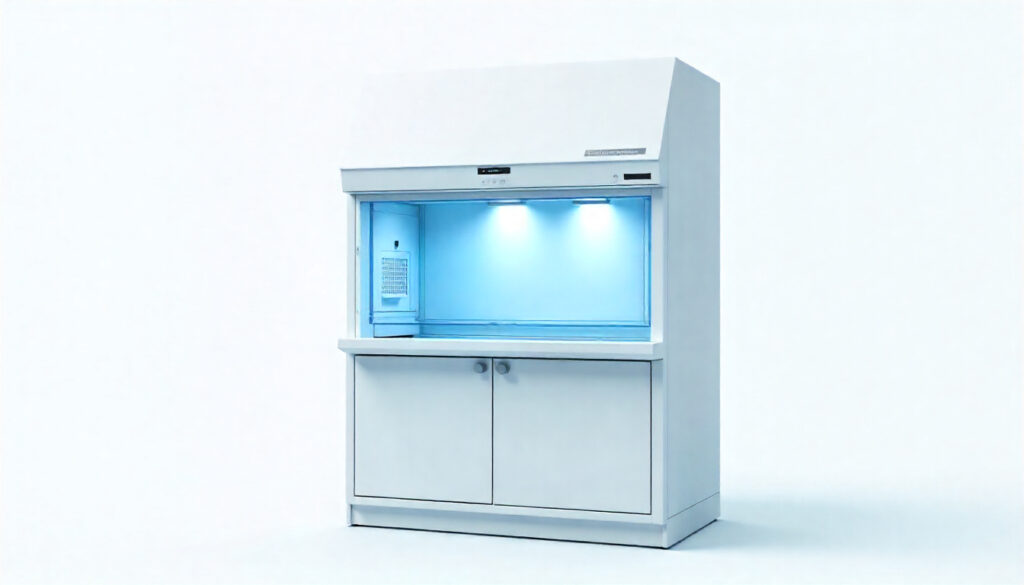
A Class II Biosafety Cabinet is ventilated and HEPA-filtered laboratory equipment that provides:
- Personnel protection from harmful aerosols
- Product protection from contamination
- Environmental protection through controlled exhaust systems
In a Class II A2 cabinet, 70% of the air is re-circulated through HEPA filters, while 30% is exhausted, either back into the room or through a duct system. This balance makes it ideal for microbiology, molecular biology, clinical labs, and pharmaceutical environments.
Key Applications of Class II Biosafety Cabinet
Here are the key applications of Class II biosafety cabinet:
- Microbiology and Virology Research
Class II A2 cabinets are widely used for safe handling of bacterial cultures, viral samples, and microbial assays. They help prevent cross-contamination and ensure safety when working with organisms that may have potential risks.
- Cell Culture and Tissue Engineering
These cabinets maintain a sterile air barrier, protecting cell lines from contamination during media changes, subculturing, and reagent preparation. They also safeguard researchers from biohazardous aerosols generated during pipetting.
- Pharmaceutical and Biotech Laboratories
Class II A2 cabinets provide reliable product integrity and controlled airflow environments for drug formulation, sterile preparations, and quality control processes.
- Clinical Diagnostic Testing
From PCR sample prep to handling patient specimens, a biosafety cabinet ensures accuracy by minimizing contamination risk. It is essential for labs processing samples for infectious disease testing.
- Genetic Engineering and Molecular Biology
Procedures involving DNA or RNA extraction, plasmid preparation, and recombinant techniques require contaminant-free environments. A Class II A2 biosafety cabinet maintains clean and laminar airflow for precision work.
- Teaching Laboratories
With students performing experiments in shared environments, the cabinet’s triple-layer protection ensures safe and contamination-free learning.
Smart Buying Tips for Class II A2 Biosafety Cabinet
Purchasing a BSC is a long-term investment. Using these expert tips can help you make the right decision:
- Check for NSF Certification
Always choose a cabinet NSF-certified for Class II standards. This ensures validated performance, airflow stability, filtration efficiency, and biological safety.
- Evaluate ULPA or HEPA Filter Quality
High-efficiency filters are the backbone of the cabinet. Look for:
- HEPA filters with the highest efficiency at 0.3 microns
- ULPA for advanced contamination control
- Easy filter replacement mechanisms
- Assess Airflow and Internal Design
Proper airflow ensures safety, so ensure that the cabinet has:
- Stable laminar flow
- Uniform downflow velocity
- Intelligent airflow sensors and real-time monitoring systems
A modern-day laboratory equipment with rounded corners, stainless steel interiors, and ergonomic armrests also enhance usability.
- Pick the Right Size for your Laboratory
Class II A2 cabinets come in various sizes, so you need to consider the following:
- Lab space
- Bench depth
- Number of users
- Type of experiments
- Energy-Saving Features
Modern biosafety cabinets come with these energy-saving features:
- Low-noise EC motors
- Reduced heat emission
- LED lighting
- Smart standby modes
These features lower long-term operating costs of the device.
- Safety Alarms and Digital Controls
A good cabinet should include:
- Airflow alarms
- Filter life indicators
- Touchscreen control panels
- UV lamp timers
- Password-protected settings
- Warranty and Service
You need to pick a manufacturer who offers:
- Local service teams
- Quick availability of spare parts
- Annual certification support
- At least 3–5 years warranty
Buying from a reliable laboratory equipment supplier ensures long-term peace of mind.
Conclusion
A Biosafety Cabinet Class II A2 is a critical safety asset for any lab dealing with biological agents. Its broad applications and proven safety profile make it the most widely adopted cabinet for research, clinical, and pharmaceutical environments.
Protect your team, your samples, and your laboratory with equipment designed for uncompromised safety. IGene Labserve delivers high-performance, NSF-certified Class II A2 Biosafety Cabinets built for accuracy, durability, and complete contamination control. Visit to equip your laboratory with the safest solutions.
FAQs
1. What kind of work does a Class II A2 biosafety cabinet perform?
It is ideal for microbiology, virology, cell culture, molecular biology, sterile compounding, clinical diagnostics, and general biosafety applications involving Risk Group 1–2 organisms.
2. Is Class I A2 cabinet suitable for handling hazardous chemicals?
It is safe for minimal chemical use, but not designed for toxic, volatile, or high-volume chemical work. For such tasks, a Class II B2 or a fume hood is recommended.
3. Why is NSF certification important for biosafety cabinets?
NSF certification ensures that the cabinet meets strict performance and safety standards for filtration efficiency, airflow stability, and biological protection.
4. Do class II A2 cabinets require special installation?
They require proper electrical supply, stable surfaces, airflow clearance, and professional certification but no major construction unless ducting is used.
5. What is the difference between class II A2 and Class II B2 biosafety cabinet?
Class II A2 cabinet is for biological work with minimal chemicals, and B2 is for frequently handling of hazardous, volatile, or toxic chemicals.