
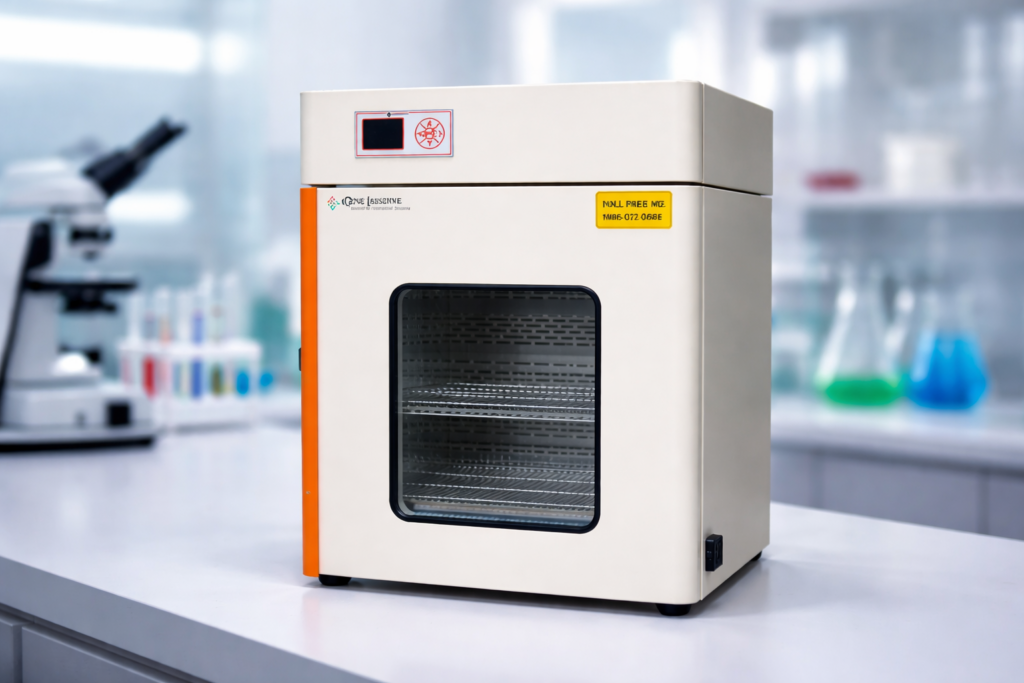
A bacteriological incubator used in laboratories need to maintain temperatures between 35 Degrees Celsius and 37 Degrees Celsius being the global standard for human pathogenic bacteria culture. Maintaining this temperature ensures reliable microbial growth, accurate diagnostic results, and consistent laboratory performance. Bacteriological incubators are indispensable for diagnostic laboratories and play a crucial role in culturing and identifying microorganisms. However, accurate temperature control inside an incubator may affect test reliability, microbial growth, and failed patient diagnosis.
Even minor temperature deviations can lead to false results, delayed diagnoses, or compromised sample integrity. Understanding the ideal temperature requirements of a bacteriological incubator and why they matter is therefore fundamental for every diagnostic lab.
Table of Contents
What is the Role of a Bacteriological Incubator?
A diagnostic lab incubator is designed to provide a controlled environment that supports the growth of bacteria and other microorganisms. These incubators regulate temperature, and in some cases humidity to replicate favorable conditions for microbial metabolism and replication. Diagnostic labs use them for applications such as:
- Culturing clinical samples like blood, urine, sputum, and swabs
- Antibiotic sensitivity testing
- Microbial identification
- Quality control of culture media
Among all controlled parameters, temperature is the most critical factor influencing microbial growth.
Standard Temperature Range for Diagnostic Labs
For most diagnostic laboratory applications, a bacteriological incubator should maintain a temperature of 35°C to 37°C, with 37°C being the most commonly used setting.
This temperature range is considered optimal because it closely matches normal human body temperature, which is where many clinically significant bacteria thrive. Most pathogen species grow best at or near 37°C, making it the standard for clinical microbiology. Here is what you should know:
1. Optimal Growth of Human Pathogen
Most bacteria responsible for human infections are mesophilic organisms, meaning they grow best at moderate temperatures. Incubating samples at 37°C ensures consistent and predictable growth patterns.
2. Accurate Diagnostic Results
Correct temperature promotes typical colony morphology and growth rates, which are essential for proper identification and antibiotic susceptibility testing.
3. Reduced Risk of False Negatives
Temperatures below the recommended range may slow bacterial growth, leading to missed or delayed detection.
Common Incubation Temperatures
While 37°C is the standard, diagnostic labs may require additional temperature settings depending on the test:
• 30°C to 32°C
Used for culturing environmental organisms, fungi, or certain slow-growing bacteria.
• 25°C to 28°C
Commonly used for fungal cultures, including molds and yeasts.
• 42°C
Occasionally used for selective growth of thermotolerant organisms such as Campylobacter species.
Because of these varying needs related to microbiology incubator temperature, many diagnostic labs prefer incubators with adjustable temperature ranges, typically from ambient temperature up to 60°C.
- Inhibited or excessive bacterial growth
- Altered colony morphology
- Inaccurate antibiotic susceptibility results
- Increased risk of repeat testing and delayed diagnoses
In clinical diagnostics, such errors can directly impact patient care and treatment decisions.
Here are the consequences of incorrect incubator temperature:
How to Use the Right Incubator for Biological Labs
When selecting a bacteriological incubator, labs should look for:
- Precise temperature control (±0.5°C or better)
- Uniform heat distribution
- Digital temperature display and alarms
- Easy calibration and compliance readiness
- Reliable construction suitable for continuous operation
Investing in a high-quality incubator ensures consistent performance and long-term reliability.
Conclusion
For diagnostic laboratories, maintaining the correct bacteriological incubator temperature is essential. A standard setting of 37°C remains the cornerstone for culturing most clinical pathogens, while adjustable ranges support specialized testing needs. Ensure accurate diagnostics with precision-engineered bacteriological incubators from iGene Labserve. Visit https://www.igenels.com/ to boost your lab performance.
FAQs
What is the ideal temperature for a bacteriological incubator?
The ideal temperature is 37°C, as it closely matches human body temperature and supports optimal growth of most clinically significant bacteria.
How precise should the incubator temperature be?
High-quality incubators should maintain temperature stability within ±0.5°C to ±1°C to ensure reliable and reproducible test results.
What features should look for in a bacteriological incubator?
The key features include precise temperature control, uniform heat circulation, digital displays, alarm systems, easy calibration, and reliable construction for continuous use.
Why is 37°C commonly used in microbiology incubators?
Because most human pathogens grow best at human body temperature, making 37°C ideal for consistent diagnostic culture growth.
How often should incubator temperature be calibrated?
Diagnostic labs typically calibrate incubators every 6 to 12 months or according to laboratory quality control protocols.
What happens if incubator temperature fluctuates?
Temperature fluctuations may cause slow growth, abnormal colonies, or unreliable test results, often requiring repeat testing.