
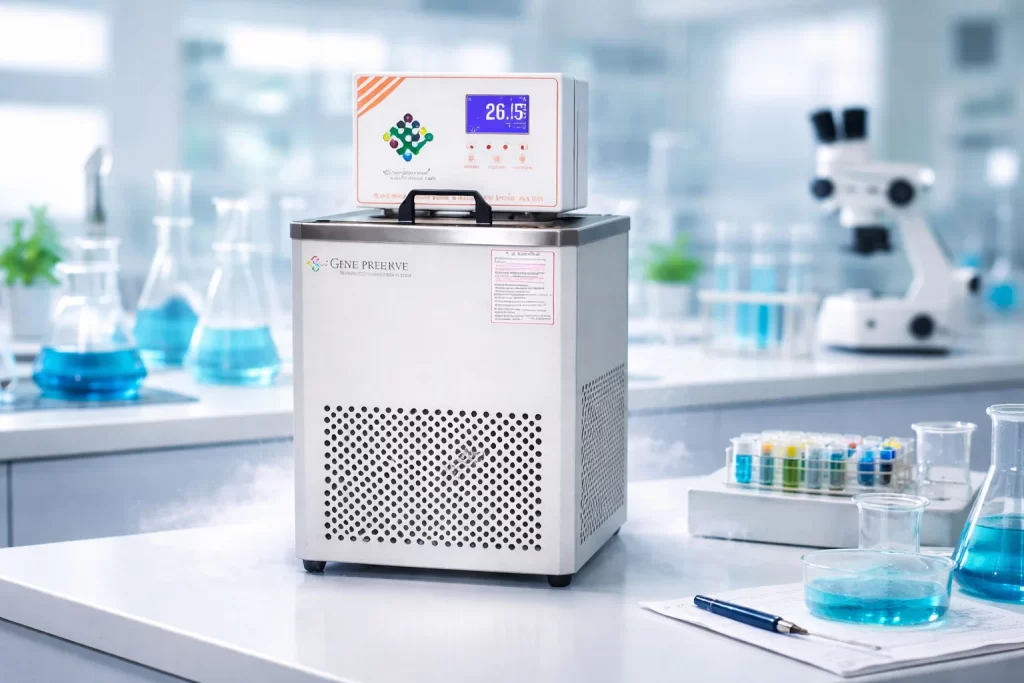
Most laboratory water baths need to maintain temperature uniformity within two to five degrees Celsius across the chamber. High-precision applications such as molecular biology or enzymatic reactions may require uniformity as accurate as 0.1 degree Celsius. However, routine tasks like sample warming can tolerate slight variations.
What is Temperature Uniformity?
Typically, temperature uniformity is all about even distribution of heat within the water bath. Ideally, the temperature must be identical at every point inside the bath. Lack of uniformity may mean that some points within the chamber may be hotter and cooler than the desired range and it may affect:
- Reaction rates
- Sample integrity
- Reproducibility of results
- Compliance with laboratory standards
Uniform temperatures with recirculating water bath chiller, on the other hand ensures that all samples are exposed to the same thermal exposure.
Why Temperature Uniformity is Important?
Wondering why uniformity of temperatures is important in a water bath shaker?
1. Ensures Experimental Accuracy
Many laboratory processes rely on precise temperatures. Even slight variations can alter enzyme activity, chemical reactions, or biological responses. Therefore, water bath shakers are the ultimate choice.
2. Improves Reproducibility
Consistent temperature distribution ensures experiments can be repeated with the same outcomes.
3. Protects Sample Integrity
Uneven heating can degrade proteins, damage cells, or denature sensitive compounds.
4. Meets Regulatory Standards
Pharmaceutical and clinical laboratories must maintain strict thermal consistency to meet quality control requirements.
Temperature Uniformity Levels by Application
High-Precision Applications (±0.1°C to ±0.2°C)
- Enzyme reactions
- DNA hybridization
- Microbiology incubation
- Molecular biology workflows
Moderate Precision Applications (±0.2°C to ±0.5°C)
- Serological testing
- Sample thawing
- Media preparation
- Quality control testing
General Laboratory Use (±0.5°C to ±1°C)
- Warming reagents
- Heating culture media
- Routine sample preparation
Selecting the appropriate uniformity range prevents overpaying for unnecessary precision while ensuring accuracy.
Factors that Affect Temperature Uniformity
- Circulation System
Water baths with built-in circulation pumps provide better heat distribution than static models.
- Bath Size and Depth
Larger baths may experience temperature gradients when circulation is inadequate.
- Load Placement
Overcrowding or improper placement of containers can block water flow and cause uneven heating.
- Lid Usage
Using a lid reduces heat loss and helps maintain uniform temperatures.
- Ambient Conditions
Room temperature fluctuations and air drafts can affect thermal consistency.
How to Verify Temperature Uniformity
Routine validation ensures the bath performs within acceptable limits.
Common methods include:
- Placing calibrated thermometers at multiple positions
- Using temperature probes with data loggers
- Running uniformity mapping tests
- Comparing readings against set temperature
Regular calibration is recommended for regulated environments.
Tips to Maintain Uniform Temperature Distribution
To ensure optimal performance:
- Use a circulating water bath for precision work
- Avoid overloading the chamber
- Maintain proper water levels
- Use distilled water to prevent scale buildup
- Keep the lid closed during operation
- Schedule routine maintenance and calibration
Proper operation helps preserve both accuracy and equipment lifespan.
Conclusion
Temperature uniformity is a critical factor in laboratory water bath performance. By selecting the appropriate water bath and maintaining proper operating practices, laboratories can ensure reliable, reproducible, and compliant results.
Ensure accurate, reliable, and consistent results with high-performance laboratory water baths from IGene Labserve. Our advanced systems deliver superior temperature uniformity, user-friendly controls, and dependable performance for research, clinical, and industrial applications.
Frequently Asked Questions
Temperature uniformity refers to how evenly heat is distributed throughout the water bath chamber, ensuring all samples experience the same temperature.
Yes, unequally heated areas can alter reaction rates, damage sensitive samples, and reduce reproducibility.
Uniformity can be verified by placing calibrated thermometers or probes at multiple positions and comparing readings.
The common causes include lack of water circulation, overcrowding, low water levels, ambient temperature changes, and scale buildup.
Yes, circulating water bath shakers distribute heat evenly and are recommended for precision laboratory work.
Maintain proper water levels, avoid overcrowding, use a lid, clean the chamber regularly, and perform routine calibration.