
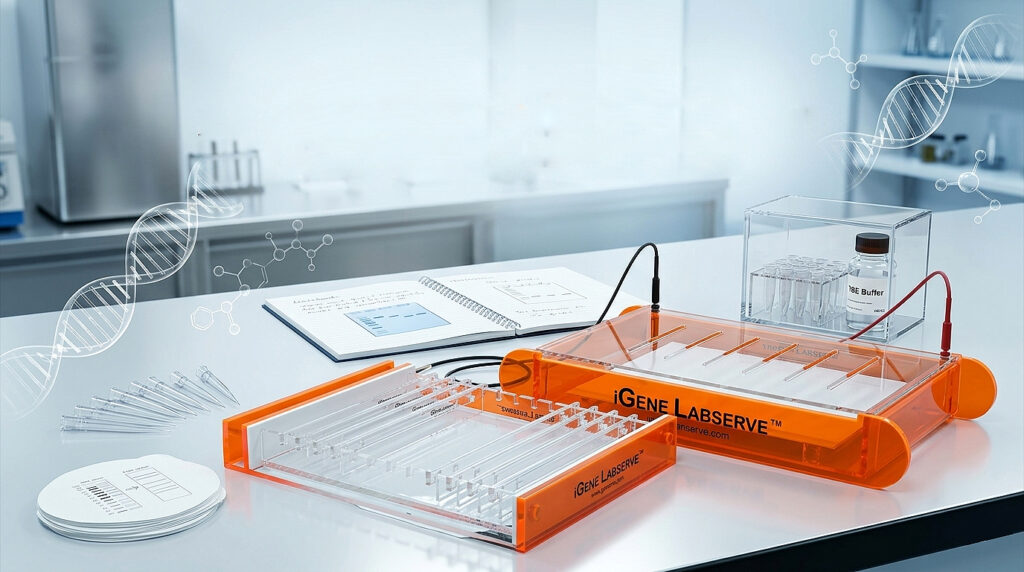
Gel electrophoresis results in the separation of DNA, RNA, and proteins based on different principles. DNA and RNA separation takes place based on size by using agarose or polyacrylamide gels. On the other hand, protein separation occurs based on size and charge using SDS-PAGE or native PAGE. Each method uses specific buffers, stains, and conditions tailored to the structure and behavior of the molecule.
Whether analyzing genetic material or studying protein expression, gel electrophoresis helps scientists separate, visualize, and identify biomolecules with precision. However, the process isn’t the same for DNA, RNA, and proteins. Each molecule behaves differently due to differences in charge, structure, stability, and size, requiring modified gel types and protocols.
Table of Contents
What is Gel Electrophoresis?
Gel electrophoresis is a laboratory technique that uses an electric field to move charged molecules through a gel matrix. Smaller molecules travel faster, while larger ones move slower, enabling separation by size.
Core components include:
- Gel matrix (agarose or polyacrylamide)
- Buffer solution
- Power supply
- Staining dyes
- Sample loading wells
DNA, RNA and Protein Separation with Gel Electrophoresis
DNA
DNA molecules carry a negative charge due to their phosphate backbone, so they naturally migrate toward the positive electrode.
Key Features:
- Gel type: Agarose
- Separation factor: Size
- Denaturation: Not required
- Stains: Ethidium bromide, SYBR Safe
- Applications: PCR analysis, restriction digestion, DNA quality checks
Agarose gels provide larger pores, ideal for separating large DNA fragments (100 bp to 20 kb or more).
RNA
RNA is similar to DNA but forms secondary structures, which can affect migration. To prevent this, denaturing agents are added.
Key Features
- Gel type: Denaturing agarose or polyacrylamide
- Separation factor: Size
- Denaturants: Formaldehyde or urea
- Stains: SYBR Green II, ethidium bromide
- Applications: mRNA analysis, gene expression studies
Denaturing conditions ensure RNA remains linear, allowing accurate size-based separation.
Protein Separation
When it comes to protein gel electrophoresis, it differs from nucleic acids because the shape and charge vary widely and SDS is used to standardize charge.
Key Features:
- Gel type: Polyacrylamide
- Separation factor: Size (SDS-PAGE) or size + charge (native PAGE)
- Treatment: SDS detergent, heat
- Stains: Coomassie blue, silver stain
- Applications: Protein purity, molecular weight determination, Western blotting
SDS coats proteins with uniform negative charge, so separation depends only on molecular weight.
Comparison of DNA, RNA, and Protein
| Feature | DNA | RNA | Proteins |
| Gel Type | Agarose | Denaturing agarose/PAGE | Polyacrylamide |
| Separation Basis | Size | Size | Size or charge |
| Denaturation | No | Yes | Yes (SDS) |
| Stains | EtBr, SYBR | SYBR | Coomassie, Silver |
| Common Use | PCR anaysis | Expression studies | Western blot |
When to Use Each Technique
Choose DNA electrophoresis for:
- Checking PCR or cloning results
- Fragment analysis
Choose RNA electrophoresis for:
- Studying gene expression
- Assessing RNA integrity
Choose protein electrophoresis when:
- Measuring protein size
- Confirming protein purification
- Performing Western blotting
Conclusion
While gel electrophoresis follows the same fundamental principle, DNA, RNA, and protein separations require different gels, treatments, and staining methods. Understanding these differences helps researchers select the right technique and obtain reliable results. Partner with iGene Labserve for reliable electrophoresis systems, premium lab consumables, and precision molecular biology solutions.
FAQs
Lorem ipsum dolor sit amet, consectetur adipiscing elit. Ut elit tellus, luctus nec ullamcorper mattis, pulvinar dapibus leo.
1. How does DNA gel electrophoresis work?
DNA gel electrophoresis uses an agarose gel where negatively charged DNA fragments migrate toward the positive electrode. Smaller fragments move faster, enabling separation by size.
2. What type of gel is used for RNA separation?
RNA is typically separated using denaturing agarose or polyacrylamide gels with chemicals like formaldehyde or urea to prevent secondary structures and ensure accurate size-based separation.
3. Why is SDS used in protein electrophoresis?
SDS (sodium dodecyl sulfate) coats proteins with a uniform negative charge and denatures them, allowing separation primarily by molecular weight during SDS-PAGE.
4. What is the difference between agarose and polyacrylamide gels?
Agarose gels are best for separating large DNA or RNA fragments, while polyacrylamide gels provide higher resolution and are ideal for proteins or small nucleic acids.
5. Can the same gel be used for DNA, RNA, and proteins?
No, each molecule requires specific gel types and conditions. DNA uses agarose, RNA uses denaturing gels, and proteins typically require polyacrylamide with SDS.