
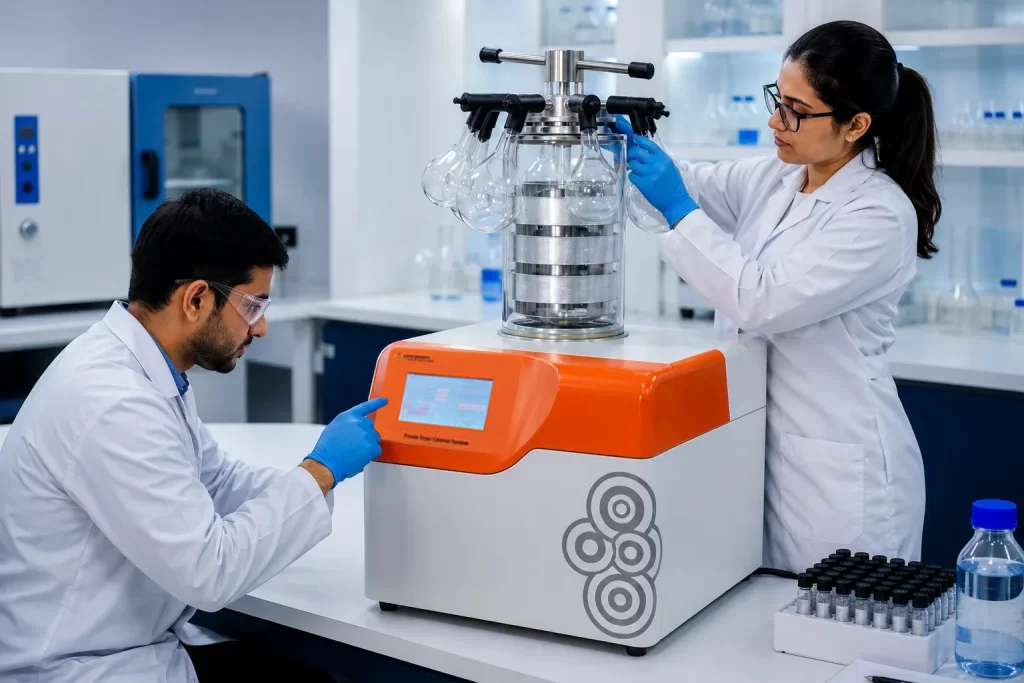
Preserving biological samples during drying is a critical step in diagnostics and research labs. Choosing a wrong drying method can degrade RNA or DNA and compromise the sample integrity.
Here is a comparison of common lab drying methods and explains which option is best for sensitivity, tolerance, and research goals:
Why drying Methods Matter for Biological Samples?
- Loss of biological activity
- Structural damage to cells or tissues
- Reduced reproducibility of experimental results
Common Lab Drying Methods
1. Freeze Drying or Lyophilization
A freeze dryer removes moisture by sublimation at very low temperatures. Samples are frozen at first and then exposed to vacuum conditions that allow ice to convert directly into vapor.
Why it works best:
- Preserves proteins, enzymes, DNA, and RNA
- Prevents heat-induced degradation
- Ideal for long-term storage and rehydration
Limitations:
Lyophilization comes with higher cost and longer processing time compared to other methods.

2. Vacuum Oven Drying
Vacuum oven drying lowers the boiling point of water, allowing samples to dry at reduced temperatures.
Best for:
- Heat-sensitive biological materials
- Labs needing faster drying than freeze drying
Limitations:
Not as protective as lyophilization for extremely fragile samples.
3. Hot Air Oven Drying
Hot air ovens rely on elevated temperatures to evaporate moisture.
Best for:
Non-biological or heat-stable materials
Limitations:
High risk of protein denaturation and sample degradation.
Drying Methods by Sample Types
| Sample Type | Method |
| Proteins and enzymes | Freeze drying |
| DNA/RNA | Freeze drying or vacuum oven |
| Tissue samples | Freeze drying |
| Heat-stable biomaterials | Vacuum oven |
| Non-biological samples | Hot air oven |
Conclusion
Frequently Asked Questions
Freeze drying causes the least structural and molecular damage.
They can for moderately sensitive samples but not for highly fragile biomolecules.
No, as heat can degrade most biological samples.