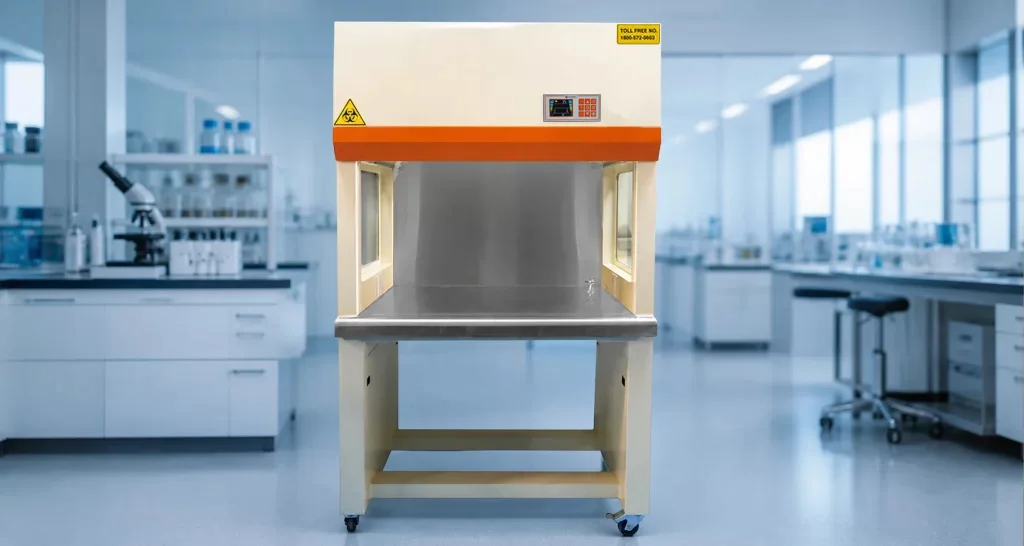
How do laminar airflow cabinets work in tissue culture labs? Learn a step-by-step process to maintain sterility, prevent contamination, and improve lab safety.
A laminar air flow cabinet is widely used in tissue culture laboratories to maintain a sterile working environment. It works by passing air through HEPA filters to remove dust, contaminants, and microbes and create a clean airflow over the work surface. This controlled airflow protects sensitive cell cultures from contamination during media preparation, and sample transfer.
Significance of Laminar Air Flow in Tissue Culture Labs
Laminar air flow refers to a controlled stream of filtered air that moves uniformly across the workspace. Tissue culture laboratories must maintain aseptic conditions when working with plant tissues, microorganisms, and cell cultures.
The laminar air flow cabinet contains HEPA filters that remove 99.97% of particles as small as 0.3 microns and ensures that the workspace is devoid of airborne contamination. Maintaining this sterile environment is the most crucial thing even when chances of contamination is minor as even that may destroy delicate tissue cultures.
Why Laminar Air Flow is Important in Tissue Culture?
Tissue culture involves the growth of cells or tissues in controlled laboratory conditions. As these cultures are often highly sensitive and prone to contamination through bacteria, fungi, or dust particles, laminar air flow in tissue culture is of great help.
Here are the laminar airflow cabinet uses:
- Maintain a sterile workspace
- Protects samples from airborne contaminants
- Ensures consistent experimental results
- Supports aseptic laboratory practices
Without this equipment, the rate of contamination in tissue culture laboratories would be significantly higher.
Step-by-Step Process of Using Laminar Air Flow in Tissue Culture Laboratories
Take a look below to understand the step-by-step process:
1. Switch on the Cabinet
Before starting work, you need to switch on the device for about 15-20 minutes to stabilize the filtered airflow. Apart from this, it also helps remove any particles present inside the workspace.
2. Disinfect the Work Surface
You need to wipe the inner surface of the laminar air flow cabinet with a solution containing about 70% alcohol or any other laboratory disinfectant. It helps remove the microorganisms that often settle on the workspace.
3. Arrange Required Materials
Before starting the experiment, you need to arrange the materials needed for tissue culture such as culture media, pipettes, forceps, and culture vessels that are to be placed inside the cabinet. That way, you can restrict unnecessary movement that in turn may disrupt the airflow.
4. Choose Appropriate Sterile Techniques
Researchers work carefully within the airflow zone to maintain sterility where hands and tools are sterilized and items handled gently to avoid disrupting the laminar airflow pattern.
5. Perform Tissue Handling Transfer
In this step, plant tissues or cell cultures are to be transferred into sterile cultural media. With constant flow of filtered air, you can prevent airborne contaminants from entering the cultural vessels.
6. Do Not Block the Airflow
All items are to be placed inside the cabinet in a manner that does not obstruct the path of airflow from the filter to the workspace. Blocking the airflow may create turbulence and increase the risk of contamination.
7. Clean the Cabinet After Use
After the completion of each procedure, you must disinfect the inside surface of the cabinet again to make sure that it is free from residential contaminants.
Best Practices for Using Laminar Air Flow Cabinet
- Sanitizing hands and tools before use
- Avoiding rapid movements that disturb airflow
- Keeping the workspace organized and uncluttered
- Regular inspection and replacement of HEPA filters
- Performing routine cabinet maintenance and validation
Common Applications of Laminar Air Flow Cabinet in Tissue culture Laboratories
Check below for the applications of laminar air flow cabinet:
- Plant tissue culture
- Cell line maintenance
- Media preparation
- Microbial culture handling
- Sample inoculation and transfer
Conclusion
Laminar air flow cabinets play a critical role in tissue culture laboratories by creating a sterile and contamination-free workspace. Following the correct step-by-step procedure and maintaining the cabinet properly helps laboratories achieve consistent and high-quality tissue culture outcomes.
Are you looking to equip your laboratory with reliable sterile workstations? iGene Labserve provides high-quality laminar air flow cabinets, biosafety cabinets, and advanced lab solutions designed to maintain strict contamination control in modern research environments. Visit https://www.igenels.com/ to upgrade your laboratory.
Frequently Asked Questions
Laminar air flow provides a sterile environment by filtering air through HEPA filters, preventing contamination during tissue culture handling.
Most laboratories run the cabinet for 15–20 minutes before starting work to stabilize airflow and remove contaminants.
Laminar air flow cabinets use HEPA filters, which remove 99.97% of airborne particles as small as 0.3 microns.