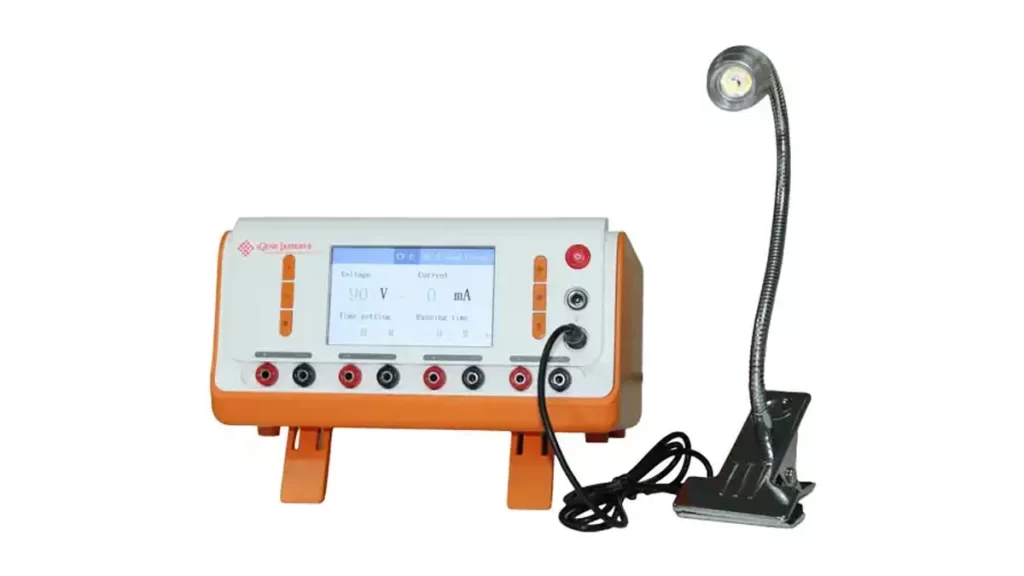
Electrophoresis is one of the basic techniques in molecular biology laboratories used to separate DNA, RNA, and proteins based on size and charge. While gels, buffers, and chambers receive maximum attention, power supply is that component that directly controls accuracy, reproducibility, and safety.
Read this guide to understand the significance of power supply for electrophoresis technique and what specifications matter for molecular biology laboratories:
What is an Electrophoresis Power Supply?
The power supply for electrophoresis is a regulated electrical unit that delivers precise voltage, current, and power to a gel electrophoresis system. It creates the electric field that drives biomolecules through the gel matrix.
Unlike generic power sources, electrophoresis power supplies are designed for:
- Stable output over long run times
- Fine control of voltage and current
- Safety in wet laboratory environments
Here is why the right power supply matters:
The performance of an electrophoresis experiment depends heavily on electrical consistency.
Poor power supply often leads to:
- Smiling or distorted bands
- Overheating of gels
- Inconsistent migration rates
- Reduced reproducibility between runs
Modern molecular biology labs prioritize precision and programmability, especially for high-throughput or sensitive applications.
Key specifications for Electrophoresis Power Supply
Here are the major specifications to search for when checking the power supply for electrophoresis:
1. Voltage Range
Most gel electrophoresis applications require 10–300 volts while advanced protein or sequencing applications may need up to 500 or 600 volts.
- Agarose gels: Typically low to medium voltage
- Polyacrylamide gels (PAGE): Higher voltage precision required
2. Current and Power Output
A good electrophoresis power supply should offer:
- Adjustable current (mA)
- Power limits (W) to prevent overheating
This allows labs to run gels in constant voltage, constant current, or constant power modes, depending on the protocol.
3. Output Stability
Stable output ensures consistent electric fields throughout the run. Fluctuations can alter migration patterns and compromise data quality.
Types of Electrophoresis Power Supply
Basic Power Supplies
- Manual controls
- Limited output range
- Suitable for teaching labs or routine agarose gels
Programmable Power Supplies
- Preset methods
- Timers and ramping functions
- Ideal for research and diagnostic labs
High-Voltage Power Supplies
- Designed for PAGE and blotting
- Greater precision and safety controls
- Used in advanced molecular workflows
Electrophoresis involves electricity and liquid buffers, making safety critical.
Essential safety features include:
- Ground fault protection
- Automatic shutoff on load failure
- Insulated output jacks
- Leak and overload detection
Modern power supplies are designed to meet international laboratory safety standards, reducing operational risk.
Compatibility with Electrophoresis Systems
Not all power supplies are universally compatible. Labs should ensure:
- Matching connector types
- Adequate output capacity for multiple gel tanks
- Compatibility with blotting modules if necessary
Multi-output power supplies are increasingly preferred in shared lab environments.
Conclusion
An electrophoresis power supply is not just a supporting accessory but a core control system for molecular biology experiments. Choosing the right unit ensures accurate separation, protects samples, and improves reproducibility across experiments.
FAQ's
An electrophoresis power supply provides controlled voltage and current to move DNA, RNA, or proteins through a gel matrix during electrophoresis experiments.
A regulated power supply maintains stable voltage and current, preventing band distortion, overheating, and inconsistent migration during electrophoresis runs.
No, high-voltage power supplies are mainly required for protein electrophoresis, PAGE, or advanced applications. Routine DNA gels usually need lower voltage units.
Stable and precise electrical output ensures consistent band separation, improved reproducibility, and reliable experimental data.