
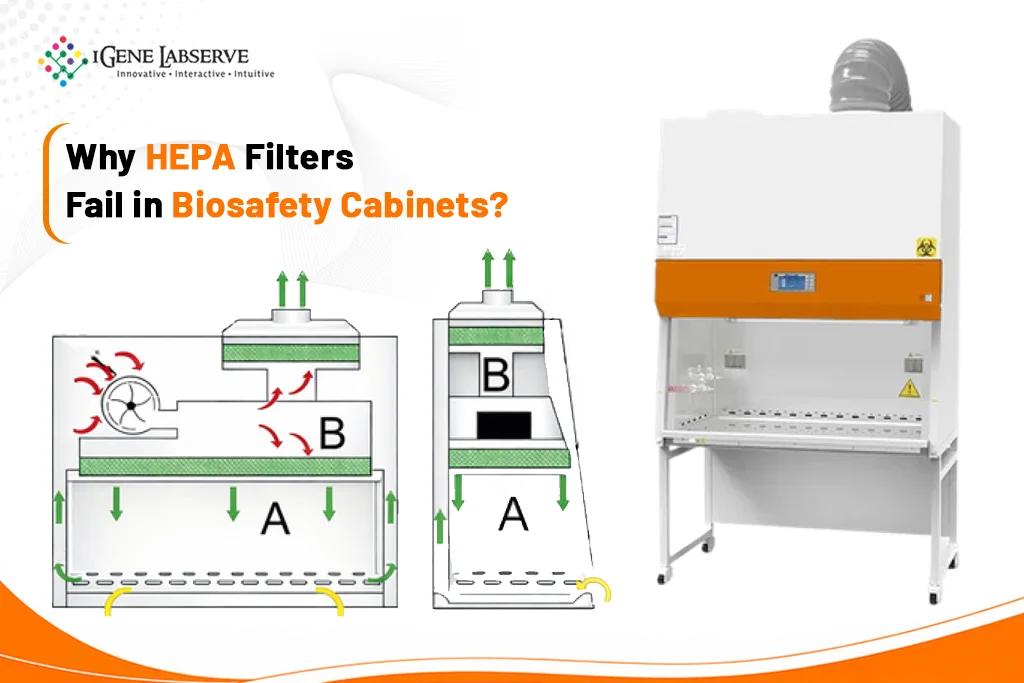
HEPA filters are one of the most crucial components of any biosafety cabinet, it ensures that harmful airborne particles are trapped before they can contaminate samples, expose laboratory personnel, or escape into the environment. Even though these filters are set to achieve an efficiency of 99.97% for particles as small as 0.3 microns, they are not immune to failure. HEPA filter failure in biosafety cabinets often result from physical damage, improper handling, chemical exposure, excessive loading of particles, and poor maintenance.
Understanding the causes if HEPA filter failure and adopting preventive maintenance practices are essential for maintaining laboratory safety and regulatory compliance.
Table of Contents
What Causes HEPA Filters to Fail in Biosafety Cabinets?
A HEPA filter in a biosafety cabinet is built for long-term performance but its effectiveness depends on the operating conditions and proper maintenance. Here are the most common causes of HEPA filter problems in a BSC:
1. Physical Damage
HEPA filter media is sophisticated and hence it can be easily punctured or torn during installation, transportation, or servicing. Even a minor tear can create a pathway for contaminated air to bypass the filter. Improper handling by untrained people in the laboratory is one of the leading reasons for premature damage or complete failure of the filter. That is why only qualified professionals must handle installation and biosafety cabinet filter replacement.
2. Build-up of Particles
A BSC operating over time attracts dust, aerosols, and microscopic particles that tend to accumulate within the HEPA filter. While the filter continues trapping contaminants, excessive loading disrupts airflow balance. A clogged filter does not lose its filtration efficiency but problems in airflow can affect the performance of the cabinet, making it difficult to maintain the protective airflow needed for safe laboratory operations.
3. Exposure to Chemicals and Moisture
Several laboratories use disinfectants, fumigation agents, and other chemicals routinely that may affect filter components over time. Prolonged exposure to corrosive substances tends to weaken or damage the filter frame extensively. Similarly, moisture or accidental water exposure often compromises the filter media, encouraging deterioration and reducing overall efficiency.
4. Improper Usage of Biosafety Cabinet
Poor work practices may put unnecessary strain on the filtration system. Blocking the front or rear air grilles, making the work area congested or rapid arm movements lead to biosafety cabinet airflow issues and reduce the protective performance of the cabinet. Following the standard operating procedures help maintain consistent airflow and extend the life of HEPA filter.
How Can you Tell if a HEPA Filter is Failing?
Unlike other mechanical equipment, HEPA filters always signal failure beforehand. Therefore, laboratories need to remain alert and check those signs that indicate that the cabinet requires inspection. Here are the common warning signs of HEPA filter failure in biosafety cabinets:
- Reduced airflow inside the cabinet
- Repeated contamination of samples despite proper aseptic techniques
- Airflow alarms or abnormal blower operation
- Failure during biosafety cabinet certification
- Visible damage to the filter or cabinet components
However, these symptoms may also result from other cabinet issues, so professional testing is essential. When it comes to filter performance, HEPA filter integrity tests and airflow verification provide the most reliable assessment of filter performance.
Tips to Prevent HEPA Filter Failure?
Preventing filter failure starts with a proactive maintenance strategy rather than waiting for problems to appear. Here are the tips to prevent HEPA filter failure:
Schedule Routine Certification of BSC
Scheduling routine BSC certification at least once a year or after relocation or repairing is essential. It may be needed even when a new HEPA filter is replaced. Certification confirms that airflow containment and filter integrity meet the required safety standards.
Good Operating Practices
As part of good operating procedures, laboratory personnel need to keep the air grilles unobstructed that helps avoid unnecessary movements inside the cabinet. Working within the recommended loading capacity can help preserve proper airflow.
Routine Cleaning
Routine cleaning and periodic inspection of cabinet components can help identify damaged gaskets, worn seals, or other issues before they affect filter performance.
Biosafety cabinet filter replacement must only take place when there is loss of integrity or air flow maintenance becomes too difficult. Replacing filters based on age may result in unnecessary expenses without improving cabinet performance. A biosafety cabinet is only as reliable as its maintenance program. Regular inspections and certification not only extend the lifespan of HEPA filters but also minimize contamination risks, protect laboratory personnel, and help laboratories comply with recognized safety standards.
Conclusion
HEPA filters are designed to provide exceptional protection, but their performance depends on proper handling, routine maintenance, and correct biosafety cabinet operation. A well-maintained HEPA filter not only supports safer laboratory operations but also contributes to the accuracy, integrity, and success of scientific work.
FAQs
There is no fixed lifespan for a HEPA filter. Its service life depends on usage, laboratory conditions, and particle load. Replacement should be based on certification results and performance testing rather than age alone.
No, if the filter media, seals, or frames are damaged, the filter should be replaced. Repairs cannot restore the filter’s certified performance or containment capability.
Most laboratories certify biosafety cabinets annually. Certification is also recommended after relocation, major repairs, or HEPA filter replacement to ensure safe operation.
Routine cabinet cleaning only removes contaminants from accessible surfaces. The HEPA filter is a sealed component and should never be cleaned directly.
Yes, a filter may lose integrity due to internal deterioration, seal failure, or airflow issues even when no visible damage is present. This is why periodic certification and integrity testing are essential.