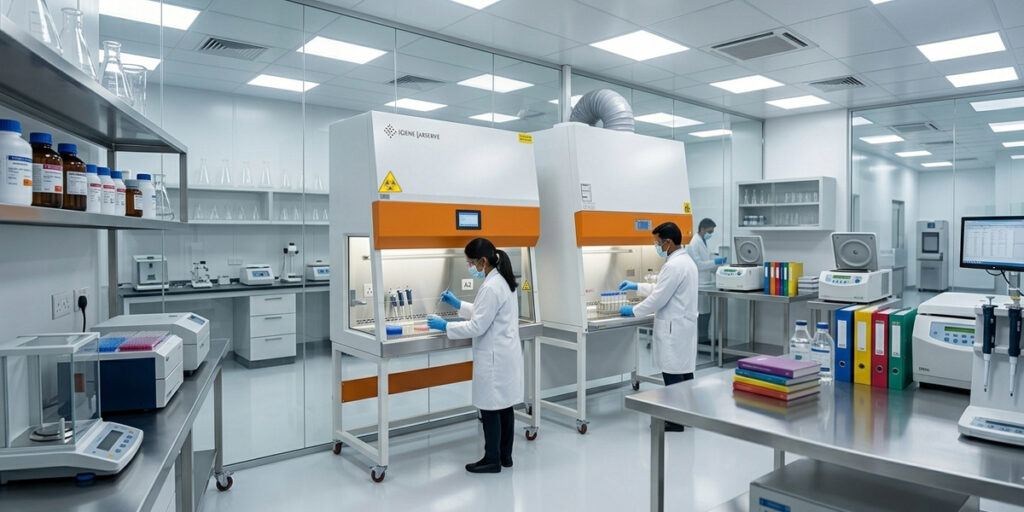
Biosafety cabinets (BSCs) are specialized laboratory containment systems designed to protect laboratory personnel, research samples, and the surrounding environment from exposure to hazardous biological agents. Commonly used in microbiology, pharmaceutical, biotechnology, and clinical laboratories, biosafety cabinets use HEPA filtration systems and controlled airflow technology to maintain a sterile and safe working environment.
Understanding the different types of biosafety cabinets—Class I, Class II, and Class III—is essential for selecting the appropriate containment solution based on biosafety levels, laboratory applications, and contamination risks.
Table of Contents
What Is a Biosafety Cabinet?
A biosafety cabinet is a ventilated laboratory workspace designed to safely handle infectious microorganisms, hazardous biological materials, and contaminated samples. Unlike standard laminar flow hoods, biosafety cabinets provide varying levels of protection for laboratory personnel, research products, and the surrounding laboratory environment.
Most biosafety cabinets comply with NSF/ANSI 49 standards, which regulate design, construction, performance, and certification requirements for biological safety cabinets.
Overview of Biosafety Cabinet Classes
Biosafety cabinets are categorized into three primary classes based on airflow design and level of protection.
Quick Comparison Table
| Class | Personnel Protection | Product Protection | Environmental Protection | Typical Use |
| Class I | Yes | No | Yes | Low- to moderate-risk biological work |
| Class II | Yes | Yes | Yes | Microbiology, pharmaceutical, and clinical labs |
| Class III | Yes (Maximum) | Yes | Yes (Maximum) | High-risk infectious pathogen research |
1. Class I Biosafety Cabinet
Class I biosafety cabinets are the simplest form of biological safety cabinets. These cabinets are primarily designed to protect laboratory personnel and the environment, but they do not protect the research sample from contamination.
How Class I Biosafety Cabinets Work
- Air is drawn inward through the front opening
- Contaminated air passes through a HEPA filter before being exhausted
- Airflow moves away from the operator to reduce aerosol exposure
Key Features of Class I Cabinets
- Protection against airborne contaminants and aerosols
- HEPA-filtered exhaust system
- Cost-effective and simple design
- Suitable for procedures where product sterility is not required
Applications of Class I Biosafety Cabinets
- Handling low- to moderate-risk biological agents
- Powder containment procedures
- Educational laboratory environments
- Biosafety Level (BSL) 1, 2, and some BSL-3 applications
2. Class II Biosafety Cabinet
Class II biosafety cabinets are the most commonly used cabinets in modern laboratories because they provide simultaneous protection for personnel, products, and the environment.
According to NSF/ANSI 49 standards, Class II Type A2 cabinets are among the most widely installed biosafety cabinets in microbiology and clinical laboratories.

How Class II Biosafety Cabinets Work
- A blower system creates a downward flow of sterile HEPA-filtered air
- Inflow air prevents contaminants from escaping through the front opening
- Air is partially recirculated and partially exhausted through HEPA filters
Key Features of Class II Cabinets
- Dual HEPA filtration system
- Sterile working conditions for sensitive samples
- Protection from biological contamination
- Controlled laminar airflow system
- Enhanced operator and environmental safety
Types of Class II Biosafety Cabinets
Type A1
- Minimum inflow velocity: 75 ft/min
- Majority of air is recirculated within the cabinet
- Limited usage due to potential contaminated air mixing
Type A2
- Minimum inflow velocity: 100 ft/min
- Approximately 60–70% recirculated air and 30–40% exhausted air
- Most widely used Class II cabinet
- Suitable for microbiology, tissue culture, and pharmaceutical applications
Type B1
- Approximately 40% recirculated air and 60% exhausted air
- Suitable for limited chemical handling applications
- Often used when small quantities of toxic chemicals are involved
Type B2

- 100% exhausted air with no recirculation
- Designed for toxic chemicals and hazardous vapors
- Requires dedicated external ducting systems
- Provides higher chemical safety compared to Type A cabinets
Type C1
- Hybrid design combining Type A and Type B functionality
- Flexible operating modes
- Can operate with or without external exhaust systems
- Improved energy efficiency and safety performance
Applications of Class II Biosafety Cabinets
- Microbiological research laboratories
- Pharmaceutical manufacturing facilities
- Clinical diagnostics laboratories
- Biotechnology research centers
- Cell culture and tissue engineering applications
3. Class III Biosafety Cabinet
Class III biosafety cabinets provide the highest level of biological containment and are used for handling extremely dangerous infectious agents.
These cabinets are completely enclosed and gas-tight, ensuring maximum protection for operators and the environment.
How Class III Biosafety Cabinets Work
- Fully sealed airtight cabinet system
- Operation performed through attached glove ports
- Supply and exhaust air pass through double HEPA filtration systems
- Negative pressure containment prevents leakage
Key Features of Class III Cabinets
- Maximum containment protection
- No direct operator contact with hazardous materials
- Integrated sterilization and decontamination systems
- Gas-tight construction for handling dangerous pathogen
Applications of Class III Biosafety Cabinets
- Biosafety Level 4 (BSL-4) laboratories
- Research involving Ebola virus and other highly infectious pathogens
- High-containment infectious disease facilities
- Government and advanced research laboratories
Biosafety Levels and Cabinet Usage
Biosafety cabinets are commonly used alongside biosafety levels (BSL), which define laboratory containment precautions.
| Biosafety Level | Risk Level | Typical Use |
| BSL-1 | Low-risk agents | Basic teaching and research labs |
| BSL-2 | Moderate-risk pathogens | Clinical and diagnostic labs |
| BSL-3 | Serious airborne diseases | Tuberculosis and airborne pathogen research |
| BSL-4 | Highly dangerous pathogens | Ebola virus and extreme infectious disease research |
Class II and Class III biosafety cabinets are critical for maintaining safety in higher biosafety-level laboratories.
Difference Between Biosafety Cabinet and Laminar Flow Hood
Many laboratories confuse biosafety cabinets with laminar flow hoods, but they serve different purposes.
| Feature | Biosafety Cabinet | Laminar Flow Hood |
| Personnel Protection | Yes | No |
| Product Protection | Yes | Yes |
| Environmental Protection | Yes | No |
| HEPA Filtration | Yes | Yes |
| Used for Hazardous Agents | Yes | No |
Laminar flow hoods protect only the sample, while biosafety cabinets protect the operator, product, and laboratory environment.
Importance of HEPA Filters in Biosafety Cabinets
HEPA (High-Efficiency Particulate Air) filters are one of the most critical components of biosafety cabinets.
These filters:
- Capture 99.97% of airborne particles as small as 0.3 microns
- Prevent contamination of laboratory samples
- Reduce exposure to infectious aerosols
- Maintain sterile airflow inside the cabinet
Regular HEPA filter inspection and certification are essential for ensuring laboratory safety compliance.
Common Mistakes While Using Biosafety Cabinets
Improper biosafety cabinet usage can compromise containment and increase contamination risks.
Common Errors Include:
- Blocking front or rear airflow grills
- Overloading the cabinet workspace
- Rapid arm movements disrupting airflow
- Using open flames inside the cabinet
- Failing to perform routine certification and maintenance
Proper operator training is essential for maintaining effective biosafety cabinet performance.
How to Choose the Right Biosafety Cabinet
Selecting the correct biosafety cabinet depends on several factors:
- Type of biological agents handled
- Required biosafety level
- Need for chemical vapor containment
- Laboratory ventilation infrastructure
- Sample sterility requirements
- Regulatory compliance standards
For most microbiology and clinical laboratories, Class II Type A2 cabinets provide the best balance of safety, efficiency, and operational flexibility.
Conclusion
Biosafety cabinets play a critical role in protecting laboratory personnel, sensitive research materials, and the surrounding environment from biological contamination and hazardous exposure.
From basic aerosol protection in Class I cabinets to maximum containment in Class III systems, each biosafety cabinet serves a specialized laboratory purpose.
Understanding the differences between Class I, II, and III biosafety cabinets helps laboratories improve safety, maintain compliance, and achieve accurate research outcomes.
IGene Labserve provides advanced biosafety cabinet solutions designed for modern laboratories, pharmaceutical facilities, and research institutions. To explore reliable laboratory safety equipment and biosafety cabinet systems, visit:
https://www.igenels.com/
FAQs
1. What are the three types of biosafety cabinets?
The three main types of biosafety cabinets are:
- Class I
- Class II
- Class III
Each provides different levels of personnel, product, and environmental protection.
2. Which biosafety cabinet is most commonly used?
Class II Type A2 biosafety cabinets are the most commonly used cabinets in microbiology, pharmaceutical, and clinical laboratories.
3. What is the difference between Class II A2 and B2 biosafety cabinets?
Class II A2 cabinets recirculate a portion of filtered air within the cabinet, while Class II B2 cabinets exhaust 100% of air externally with no recirculation.
4. Do biosafety cabinets protect against chemicals?
Only certain models, such as Class II Type B2 cabinets, are suitable for handling hazardous chemical vapors and toxic compounds.
5. Is a laminar flow hood the same as a biosafety cabinet?
No. Laminar flow hoods protect only the sample, whereas biosafety cabinets provide protection for personnel, products, and the laboratory environment.