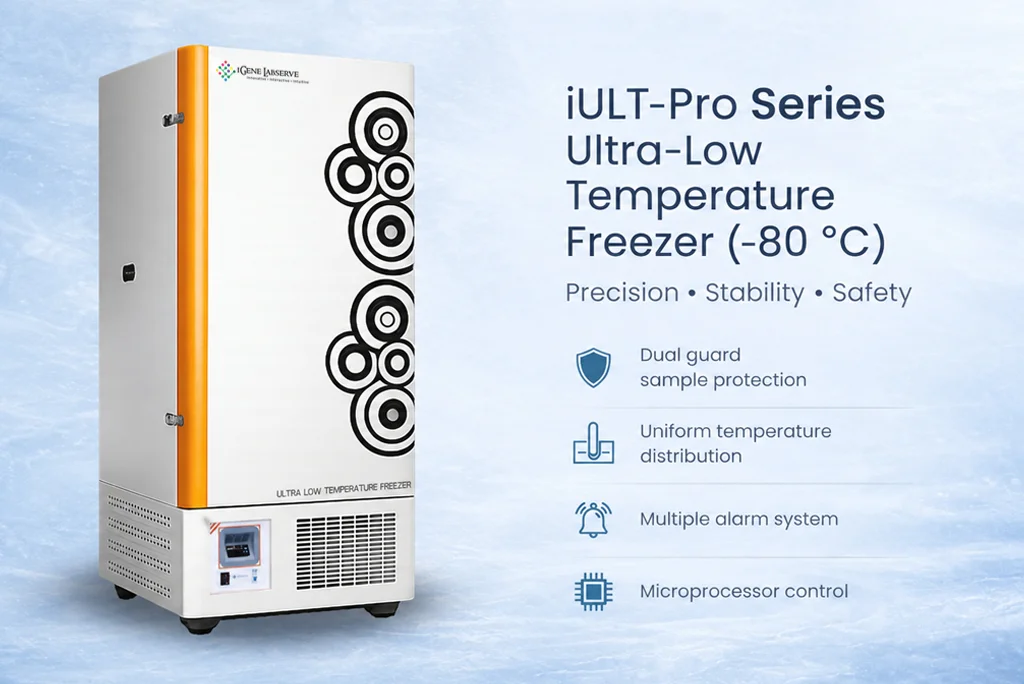
Ultra-low temperature freezers are essential for storing biological samples, vaccines, reagents, and other temperature-sensitive materials. However, maintaining temperatures as low as -80 degrees Celsius requires continuous cooling and has the ability to lower laboratory energy costs significantly. An energy efficient ULT freezer uses technologies such as efficient compressors improved insulation, intelligent temperature control and optimized airflow to reduce power consumption while maintaining the required storage conditions.
Why ULT Freezers have High Energy Consumption?
ULT freezers operate continuously to maintain ultra-low temperatures, which naturally creates a higher energy demand than conventional laboratory refrigerators and freezers. So, take a look below to understand the reasons behind:
Maintaining Ultra-Low Temperatures
Keeping samples at ultra-low temperatures requires the refrigeration system to remove heat continuously. The lower the target temperature, the greater is the cooling demand. This makes freezer power consumption an important consideration for laboratories operating multiple units.
Heat Gain From the Laboratory Environment
Every time a freezer door is opened, warm air enters the cabinet. The refrigeration system then has to work harder to bring the internal temperature back to the required level. A warm laboratory environment, frequent door opening and poor equipment placement can therefore increase ULT freezer energy consumption.
Older Cooling Technology
Older ULT freezers may use less efficient compressors, insulation and control systems. As equipment ages, seals and refrigeration components can also deteriorate, potentially increasing energy use and affecting temperature recovery.
Features That Make an Energy-Efficient Cooling Freezer
Choosing an energy efficient ULT freezer involves looking beyond its advertised capacity. Several design features can influence long-term energy consumption and storage performance. Here they are:
1. High-Efficiency Compressor Systems
The compressor is one of the most crucial energy saving features in ULT freezer that influences energy consumption. Modern systems may use high-efficiency or variable-speed compressor technology that adjusts cooling output according to demand rather than operating at maximum capacity continuously.
This helps reduce unnecessary electricity usage while supporting consistent ultra-low temperature storage.
2. High-Performance Insulation
Effective insulation reduces heat transfer between the laboratory environment and the freezer interior. Better cabinet insulation, insulated inner doors and well-designed door seals can limit cold-air loss and reduce the cooling load thereby reducing lab freezer running costs.
3. Intelligent Temperature Control
Advanced temperature control systems continuously monitor internal conditions and regulate refrigeration accordingly. Precise controls can help maintain stable temperatures without unnecessary cooling.
Features such as digital temperature displays, alarms and monitoring systems support ultra low temperature storage and help the laboratory staff identify temperature changes quickly.
4. Efficient Airflow and Cabinet Design
Internal airflow affects temperature uniformity throughout the storage space. An optimized cabinet design can help distribute cold air efficiently, supporting consistent storage conditions without placing excessive demand on the refrigeration system.
5. Energy-Efficient Refrigeration Technology
Modern ULT freezers may incorporate refrigeration systems designed to improve efficiency while maintaining very low temperatures. The choice of refrigeration technology, components and controls influence both energy consumption and overall equipment performance.
| Feature | How it Helps | Potential Benefits |
| Efficient compressor | Reduces unnecessary cooling demand | Lower power consumption |
| Variable-speed operation | Adjusts cooling output to demand | Improved efficiency |
| High-quality insulation | Limits heat transfer | Better cold storage efficiency |
| Efficient inner doors | Reduces cold-air loss | Lower cooling demand |
| Intelligent temperature control | Maintains stable conditions | Avoids excessive cooling |
| Door-open alarm | Limits prolonged opening | Reduced recovery demand |
| Optimized airflow | Supports temperature uniformity | Efficient cooling |
| Energy monitoring | Tracks electricity usage | Better cost management |
As ULT freezers operate round the clock, the electricity consumption has a significant impact on the laboratory energy costs. However, when assessing the costs, the actual figure is likely to vary based on temperature settings, ambient conditions, loading, door-opening frequency, and the refrigeration technology of the equipment.
How to Reduce Energy Costs Without Replacing The ULT Freezer?
Laboratories do not always need to replace existing equipment to improve efficiency. Operational changes can also help reduce energy use.
Avoid Unnecessary Door Opening
Organizing samples makes it easy to access common materials and easy to locate. This reduces the amount of time the door remains open and limits warm-air entry.
Maintain Appropriate Operating Temperature
The freezer should be operated at the temperature required for the stored samples and applicable protocols. Storage requirements should always take priority over energy savings.
Keep Samples Organized
Maintain Seals and Cooling Components
Damaged door gaskets, blocked ventilation areas or poorly maintained cooling components can affect performance. Regular inspection and maintenance can help the freezer operate as intended.
Monitor Energy Consumption
Measuring actual electricity use provides a clearer picture of operating costs than relying only on manufacturer specifications. Energy monitoring can also help identify unusual increases in consumption.
What Should Labs Prioritize when Choosing ULT Freezers?
The freezer with the lowest advertised energy consumption is not automatically the right choice for every laboratory.
A practical evaluation should consider energy efficiency, temperature stability, temperature uniformity, recovery time, storage capacity, reliability, monitoring and maintenance requirements together.
The objective is to achieve efficient ultra-low temperature storage while maintaining the conditions required for sample integrity. Energy savings should support laboratory performance rather than compromise it.
Conclusion
An energy efficient ULT freezer can help laboratories manage long-term operating expenses while providing reliable ultra-low temperature storage. Efficient compressors, high-performance insulation, intelligent temperature control and optimized cabinet design can all contribute to lower ULT freezer energy consumption.
Are you looking for reliable laboratory equipment for efficient and dependable operations? Visit https://www.igenels.com/ to explore a wide range of laboratory equipment designed to meet the needs of research, healthcare, pharmaceutical and scientific facilities.
Frequently Asked Questions
An energy-efficient ULT freezer is designed to maintain ultra-low temperatures while using less electricity than comparable conventional equipment. Compressor efficiency, insulation, temperature controls and cabinet design can all influence energy performance.
Energy consumption varies by model and operating conditions. Temperature setting, cabinet size, ambient temperature, door openings, loading and refrigeration technology can all affect daily electricity use.
Efficient compressors, variable-speed operation, high-performance insulation, insulated inner doors, intelligent temperature controls, optimized airflow and energy monitoring can contribute to lower consumption.
Reduce unnecessary door opening, keep samples organized, maintain door seals and cooling components, ensure adequate ventilation and monitor actual energy consumption. Operating at an appropriate temperature can also help where storage requirements permit.