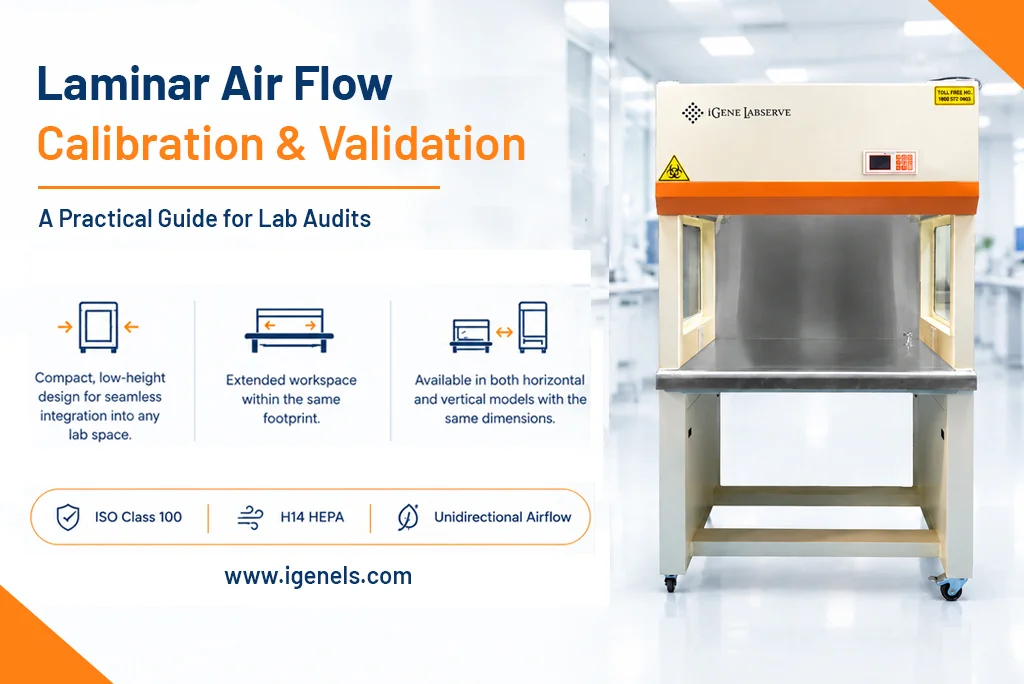
Laminar air flow calibration measures whether the airflow performance of the cabinet meets defined requirements and validates documents for its intended use. Depending on the equipment and the criteria applicable, testing may include airflow velocity measurements and HEPA filter integrity checks. Maintaining accurate reports, acceptance records, and corrective action documentation helps laboratories demonstrate equipment control during audits.
Laboratories rely on controlled airflow to minimize contamination risks during sensitive procedures. However, installing a laminar flow cabinet is only one part of maintaining suitable working conditions. Regular performance checks, calibration records, and validation documentation are equally important, particularly when preparing for laboratory audits. Understanding laminar air flow calibration and validation helps laboratory managers identify performance issues, maintain reliable equipment records, and demonstrate compliance with applicable quality requirements.
What is Laminar Air Flow Calibration?
Laminar air flow calibration helps measure the cabinet’s airflow performance and compares the results against defined acceptance criteria, manufacturer specifications, or applicable standards. Here is what you need to know:
Purpose of Calibrating a Laminar Flow Cabinet
Calibration helps establish whether airflow measurements fall within the required limits. It also helps identify deviations that could affect the cabinet’s intended performance.
Calibration Supports Consistent Airflow Performance
During laminar flow cabinet calibration, suitable measuring instruments are used to assess parameters such as airflow velocity. Instrument calibration and traceability are important for ensuring that recorded measurements are reliable and suitable for quality documentation.
Laminar Air Flow Validation vs. Calibration: A Quick Glance
Even though calibration and validation seems similar, the purpose they serve is different:
| Aspect | Calibration | Validation |
| Main Purpose | Measures performance against defined criteria | Documents suitability for intended use |
| Typical Focus | Airflow velocity and measurement accuracy | Overall performance against requirements |
| Documentation | Calibration results and instrument traceability, where applicable | Validation or qualification records and acceptance results |
What Calibration Establishes
Calibration provides measurement results that help determine whether specific parameters meet their acceptance criteria.
What Validation Confirms
Laminar air flow validation establishes documented evidence that the cabinet performs as intended under defined conditions. The scope depends on the equipment, laboratory procedures, and applicable requirements.
Why Laboratories May Need Both
Calibration provides important measurement evidence, while validation considers whether the equipment meets its intended requirements. Together, they support equipment control and audit readiness and make it easy to acquire laminar flow cabinet certification.
Laminar Airflow Calibration Procedure: Step by Step Procedure
A documented laminar airflow calibration procedure helps laboratories follow a consistent approach to performance assessment.
Step 1: Review Equipment Details and Operating Conditions
In this step, one needs to record the cabinet’s identification, model, location, operating status, and relevant manufacturer specifications.
Step 2: Inspect the Cabinet and HEPA Filter System
Check the cabinet for visible damage, obstructions, and other issues that may affect airflow. Review the HEPA filter system and relevant maintenance records.
Step 3: Conduct Laminar Airflow Velocity Testing
Laminar airflow velocity testing helps measure airflow at defined locations with the help of appropriate instruments. Thereafter, results are compared against the acceptance criteria applicable to the cabinet.
Step 4: Perform HEPA Filter Integrity Testing if Required
HEPA filter integrity testing assesses whether the filter and its installation meet the specified integrity requirements. The test method depends on the equipment and the procedures applicable.
Step 5: Compare Results with Defined Acceptance Criteria
Review the measurements against manufacturer specifications, relevant standards, and laboratory requirements. Next, you need to investigate the results that fall outside the permitted limits.
Step 6: Document Findings and Corrective Actions
The final step is for recording test results, deviations, corrective measures, and retesting outcomes where applicable. This documentation supports traceability during audits. The precise testing scope and acceptance limits should always reflect the cabinet design, intended use, and applicable requirements.
What should be Included in a Laminar Flow Cabinet Validation Report?
A complete laminar flow cabinet validation report should provide clear evidence of the equipment’s performance and assessment.
Important records include:
- Equipment identification, model, and location.
- Calibration details and traceability of measuring instruments.
- Airflow test results and acceptance criteria.
- HEPA filter integrity results, where applicable.
- Deviations, corrective actions, and retest records.
- Test dates, responsible personnel, and approval details.
Maintaining these records in an organized format helps laboratories retrieve evidence quickly during audits. Documentation should also align with the laboratory’s quality management system and applicable regulatory or accreditation requirements.
Common Audit Findings in Laminar Flow Cabinet
Laboratory audits may identify gaps in equipment documentation or unresolved performance issues. Common findings include:
- Missing or outdated calibration records
- Incomplete airflow testing documentation
- Unresolved deviations or failed test results
- Missing filter integrity evidence where required
- Unclear acceptance criteria or overdue reassessment
To minimize these gaps and ensure laminar flow cabinet qualification, maintaining an updated equipment register, establishing testing schedules based on risk and applicable requirements, and reviewing records before audits is essential. Make sure that corrective actions are documented and verified rather than simply marked as completed.
Conclusion
Laminar air flow calibration and validation play an important role in maintaining equipment performance, minimizing contamination risks, and preparing laboratories for audits. Are you searching for reliable laboratory equipment solutions? Choose iGene Labserve for quality laboratory equipment designed to support your research and testing requirements. Visit IGene Labserve to explore suitable solutions for your laboratory.
Frequently Asked Questions
Laminar air flow calibration measures airflow-related parameters and compares the results against defined requirements to assess equipment performance.
Depending on the cabinet and applicable requirements, testing may include airflow velocity measurements, HEPA filter integrity testing, and other relevant performance checks.
Filter integrity testing is different from airflow calibration. It may form part of a broader validation or qualification program when required.
Common records include calibration reports, airflow test results, filter integrity reports where applicable, acceptance criteria, equipment details, and corrective action documentation.