
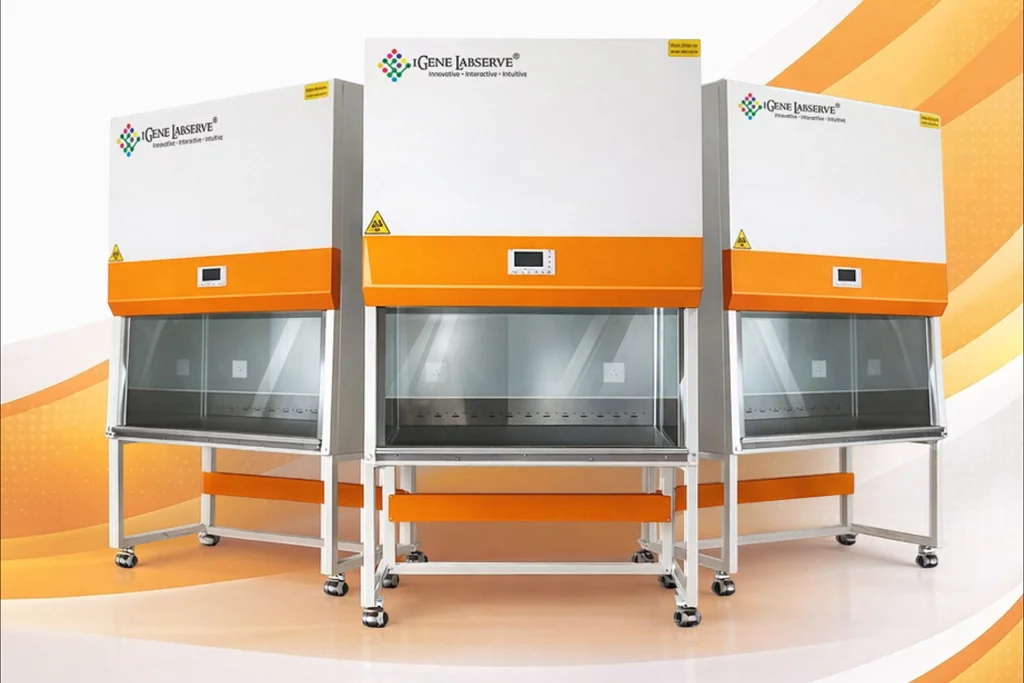
A biosafety cabinet is a ventilated enclosure used in laboratories and designed to protect laboratory personnel, research samples, and the surrounding environment from biological contamination. The best equipment for labs depends on the type of research, biosafety level, airflow requirements, and the category of cabinet.
Laboratories working with infectious agents, cell cultures, pharmaceuticals, and microbiological samples require reliable containment systems for safety and prevention of contamination. Choosing the right equipment is essential for the operator handling the equipment, maintaining sterile conditions, and meeting laboratory compliance standards. This complete biosafety cabinet buying guide explains different types of biosafety cabinets, compares Class II A2 and Class II B2 models, and helps laboratories identify the best equipment for their applications.
Table of Contents
What is a Biosafety Cabinet?
A biosafety cabinet (BSC) is a specialized and enclosed workspace used in laboratories to safely handle biological materials, pathogens, and contaminated samples. These cabinets use advanced HEPA filtration system to remove airborne particles and maintain a controlled sterile environment.
Unlike standard laminar airflow cabinets, biosafety cabinets provide three levels of protection:
- Personnel protection
- Product protection
- Environmental protection
Biosafety cabinets are widely used in:
- Microbiology laboratories
- Pharmaceutical research facilities
- Biotechnology companies
- Diagnostic laboratories
- Healthcare and life science institutions
Modern cabinets also help laboratories reduce cross-contamination risks and comply with biosafety regulations.
Types of Biosafety Cabinets
Understanding the types of biosafety cabinets is the first step in selecting the right equipment.
1. Class I Biosafety Cabinet
Class I cabinets protect laboratory personnel and the environment but do not protect the product or the sample itself. These cabinets are commonly used for low-risk microbiological procedures.
Best suited for:
- Basic microbiology work
- Low-to-moderate risk biological applications
2. Class II Biosafety Cabinet
Class II cabinets are the most commonly used in biological safety workstations in laboratories as they protect:
- Operators
- Samples
- Laboratory environment
These cabinets maintain sterile airflow by using a combination of inflow and downflow filtered air.
3. Biosafety Cabinet Class II A2
The Biosafety Cabinet Class II A2 is widely preferred for microbiology laboratories, pharmaceutical applications, and research facilities because it balances safety, energy efficiency, and ease of installation.
Key features:
- Approximately 70% air recirculation
- HEPA-filtered downflow air
- Suitable for routine microbiological research
- Lower energy consumption
- Easy integration into laboratories
4. Biosafety Cabinet Class II B2
The Biosafety Cabinet Class II B2 is designed for applications involving hazardous chemicals and toxic vapors alongside biological agents.
Key features:
- 100% exhausted airflow
- No air recirculation
- Higher containment capability
- Dedicated exhaust system required
These cabinets are commonly used in advanced pharmaceutical and chemical laboratories.
5. Class III Biosafety Cabinet
Class III biosafety cabinets are fully enclosed gas-tight containment systems designed for handling highly infectious pathogens in maximum-security laboratories.
Applications include:
- High-risk pathogen research
- BSL-4 laboratory environments
- Advanced infectious disease studies
Difference between A2 and B2 Biosafety Cabinet
Feature | Class II A2 | Class II B2 |
Air Recirculation | About 70% re-circulated | No recirculation |
Exhaust Air | Approximately 30% exhausted | 100% exhausted |
Chemical Vapor Handling | Limited | Excellent |
Installation | Easier | More complex |
Energy Efficiency | Higher | Lower |
Typical Applications | Microbiology and diagnostics | Toxic chemical handling, airborne and hazardous microbes |
Many diagnostic and microbiology laboratories prefer Class II A2 cabinets because they provide efficient contamination control with lower installation complexity. In contrast, Class II B2 cabinets are ideal for laboratories handling hazardous chemicals, airborne and hazardous microbes and volatile compounds.
Tips to Choose a Biosafety Cabinet
Understand Your Laboratory Application
Different laboratories require different containment systems.
Before purchasing, identify whether the cabinet will be used for:
- Cell culture research
- Diagnostic testing
- Pharmaceutical development
- Biotechnology research
- Clinical microbiology
The applications of biosafety cabinet systems directly influence cabinet selection.
Match the Cabinet with Biosafety Levels
Laboratories should choose cabinets according to their biosafety level requirements.
Biosafety Levels:
- BSL-1: Low-risk organisms
- BSL-2: Moderate-risk pathogens
- BSL-3: Airborne infectious agents
- BSL-4: Dangerous and exotic pathogens
Understanding biosafety levels helps laboratories maintain compliance and improve workplace safety.
Evaluate the HEPA Filtration System
A high-performance HEPA filtration system is essential for maintaining sterile airflow and preventing airborne contamination.
Most modern biosafety cabinets use:
- HEPA filters with 99.97% efficiency at 0.3 microns
- Advanced airflow balancing systems
- Contamination prevention technology
Efficient filtration improves:
- Operator safety
- Sample integrity
- Laboratory cleanliness
Look for NSF Certification and Compliance
NSF-certified biosafety cabinets undergo rigorous testing for:
- Airflow performance
- Containment efficiency
- Filtration quality
- Safety compliance
Laboratories should always prioritize certified equipment to meet international biosafety standards.
Check Cabinet Ergonomics and Build Quality
The best biosafety cabinet for labs should improve both safety and operator comfort.
Important features include:
- Stainless steel interiors
- Low-noise operation
- Ergonomic armrests
- Touchscreen control panels
- Energy-efficient airflow systems
- UV sterilization support
Well-designed cabinets also reduce operator fatigue during extended laboratory procedures.
Consider Biosafety Cabinet Maintenance
Regular biosafety cabinet maintenance is crucial for long-term performance and laboratory compliance.
Maintenance requirements include:
- Annual certification
- HEPA filter inspection and replacement
- Airflow testing
- Surface decontamination
- UV lamp servicing
Routine maintenance helps laboratories maintain consistent contamination control and operational reliability.

Best Biosafety Cabinet for Labs: Key Features to Consider
When comparing laboratory biosafety solutions, prioritize cabinets with:
- NSF-certified performance
- Advanced HEPA filtration systems
- Real-time airflow monitoring
- Low vibration technology
- Energy-efficient operation
- Smart contamination control systems
- Durable stainless steel construction
Many modern laboratories also prefer intelligent biosafety cabinets integrated with AI and IoT-enabled monitoring systems for better operational management.
Common Mistakes to Avoid When Buying Biosafety Cabinet
Laboratories often make purchasing mistakes that affect safety and operational efficiency.
Avoid:
- Choosing the wrong cabinet class
- Ignoring airflow and exhaust requirements
- Buying uncertified equipment
- Confusing laminar airflow cabinets with biosafety cabinets
- Overlooking long-term maintenance costs
Laboratories should always evaluate safety requirements, workflow efficiency, and compliance standards before investing in microbiology laboratory equipment.
Conclusion
Selecting the right biosafety cabinet is essential for maintaining laboratory safety, contamination control, and regulatory compliance. Are you looking for reliable and NSF-certified biosafety cabinets for your laboratory? iGene Labserve offers advanced laboratory safety solutions designed to deliver superior contamination control, operator protection, and long-term performance for microbiology, pharmaceutical, biotechnology, and research facilities.
Frequently Asked Questions
Class II A2 biosafety cabinets are commonly considered the best option for microbiology laboratories because they provide personnel, product, and environmental protection while maintaining energy efficiency and easy installation.
Class II A2 cabinets recirculate filtered air and are suitable for standard microbiology applications, while Class II B2 cabinets exhaust 100% of air and are designed for hazardous chemical and toxic vapor applications.
Most biosafety cabinets should be professionally certified at least once every year to ensure proper airflow performance, filtration efficiency, and laboratory safety compliance.
A HEPA filtration system removes airborne contaminants and biological particles, helping maintain sterile conditions and reducing contamination risks inside the laboratory.
Yes, biosafety cabinets are essential microbiology laboratory equipment because they protect laboratory personnel, samples, and the environment from biological hazards and airborne contamination.