Table of Contents
What Does PCR Amplification Failure Mean?
A successful PCR reaction produces a DNA fragment of the desired size after thermal cycling. However, when amplification does not occur and the results are inconsistent, it indicates that PCR is not amplifying DNA. Check below for the common signs:
- No DNA bands after gel electrophoresis
- Weak or faint amplification
- Multiple or non-specific bands
- Different results from identical samples
Identifying these signs early helps determine the most appropriate strategy for troubleshooting.
Quick PCR Troubleshooting Guide
| Problem Observed | Possible Cause | Recommended Solution |
| No DNA bands | Poor DNA template design | Assess DNA integrity, concentration, and purity before repeating the reaction |
| Weak amplification | Low DNA concentration or degraded DNA | Use a fresh sample or optimize template concentration |
| No amplification despite correct setup | Presence of PCR inhibitors | Purify the DNA sample to remove contaminants |
| Multiple or non-specific bands | Incorrect annealing temperature | Optimize the annealing temperature using gradient PCR |
| Primer dimer or unintended DNA fragments | Poor primer design | Redesign primers with appropriate specificity and melting temperature |
| Inconsistent results | Pipetting or reagent preparation errors | Prepare a fresh master mix and verify reagent volumes |
| Amplification failure in all samples | PCR machine performance issues | Perform sample preparation inside a dedicated PCR Workstation |
Primary Reasons for PCR Amplification Failure
Check below for the issues in the PCR machine that may lead to amplification failure:
1. Poor Quality of DNA Template
The success rate of PCR depends on the DNA template quality to a great extent. Contaminated or degraded DNA when present in insignificant amounts may disrupt the amplification process. Before setting up the reaction, the laboratory personnel needs to set up the reaction, verify DNA purity and concentration, using the best quality assessment methods.
2. Incorrect Annealing Temperature
The annealing temperature determines if primers bind to the target DNA sequence effectively. When the temperature becomes too high, the binding fails and too low a temperature may produce incorrect amplification. Optimizing this parameter is one of the simplest ways to improve PCR performance.
3. Presence of PCR Inhibitors
Contamination introduced during DNA extraction may interfere with PCR performance. Common PCR inhibitors include phenol, ethanol residue, salts, blood components, and plant-derived compounds. These substances can reduce polymerase activity and result in failed or weak amplification.
4. Errors in PCR Reaction Setup
Even the smallest errors during reaction preparation may have a significant impact on DNA amplification. Incorrect reagent concentration, inaccurate pipetting, omitted components, or reagents that are no longer good for use may also contribute to failed DNA amplification.
5. Problems in the PCR Machine
Even when the reaction mixture is correctly prepared, issues in the machine itself may affect the results. If the PCR machine is not properly calibrated and has inconsistent temperature control or incorrect cycling parameters, amplification failure is likely. Regular maintenance ensures reliable performance.
Best Practices to Prevent DNA Amplification Issues
With good laboratory practices, you can reduce the likelihood of failed PCR reactions:
- Use high-quality DNA samples
- Store enzymes and reagents according to manufacturer’s recommendations
- Prepare fresh reaction mixes whenever possible
- Use filter pipette tips to minimize contamination
- Regularly maintain and calibrate the PCR Machine
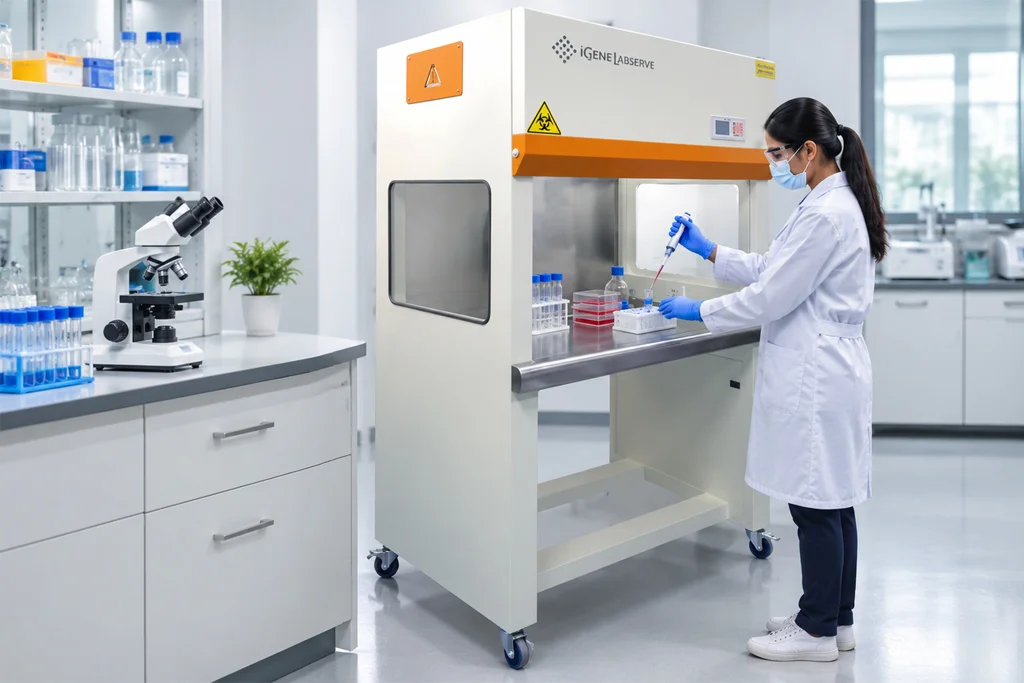
- Prepare reactions in a clean PCR Workstation
- Validate primer design before beginning experiments
- Always include appropriate positive and negative controls
So, you can understand what contributes to more reliable amplification, particularly in high-throughput or diagnostic laboratories.
Conclusion
If your PCR is not amplifying DNA and producing inconsistent results, don’t panic. With the right approach and attention to detail, you can improve your chances of achieving accurate and reliable PCR results. At iGene Labserve, we provide high-quality PCR cabinets and molecular biology solutions to support accurate and consistent research. Get in touch with us here https://www.igenels.com/ to explore our range of laboratory solutions.
Frequently Asked Questions
No bands usually indicate poor DNA quality, incorrect reaction conditions, primer-related problems, or issues with the PCR setup.
PCR inhibitors interfere with DNA polymerase activity, reducing or completely preventing DNA amplification.
Yes, an incorrect annealing temperature can either prevent primer binding or produce non-specific amplification products.
High-quality, uncontaminated DNA provides the best chance of obtaining consistent and reliable amplification.
The calibration schedule depends on laboratory protocols and manufacturer recommendations, but routine maintenance and periodic calibration are essential for consistent performance.