Biological research involves working with microorganisms that may pose varying levels of risks. To ensure the safety of laboratory personnel, the environment, and the public, standardized safety classifications known as biosafety cabinet (BSL) are used worldwide.
Biosafety levels (BSL-1 to BSL-4) are standardized containment classifications used in laboratories to safely handle infectious microorganisms based on their risk level, transmissibility, and severity.
These levels, ranging from BSL-1 to BSL-4, define the containment precautions required for handling different types of biological agents. Understanding these biosafety levels is essential for anyone working in microbiology, clinical labs, or research facilities.
Table of Contents
What are Biosafety Levels?
Biosafety levels (BSL) are a set of biocontainment protocols designed to safely handle infectious agents in laboratory environments. Each level is defined based on the following parameters of the organism:
How are biosafety levels defined?
The purpose of setting biosafety levels is to indicate what particular measures a laboratory must have in place for the containment of biological agents and microbes. Each biosafety level is defined according to the following factors:
- Risks associated with containment
- Transmissibility
- Severity of infection
- Origin of the microbe
- Type of the work conducted in the lab
- Route of exposure
- Agent in question
Quick Overview of Biosafety Levels
| Biosafety Level | Risk Level | Examples | Key Safety Measures |
| BSL-1 | Low | Non pathogenic E.Coli | Basic lab practices |
| BSL-2 | Moderate | HIV, Staphylococcus | PPE, restricted access |
| BSL-3 | High | Tuberculosis, West Nile Virus | Controlled airflow, surveillance |
| BSL-4 | Extreme | Ebola, Marburg Virus | Full isolation, positive-pressure suits |
Types of biosafety levels
1. Biosafety level 1 (BSL-1)

BSL-1 is the lowest level of containment and is suitable for laboratories working with organisms that pose minimal risk to healthy adults.
These labs typically handle non-pathogenic strains of bacteria and do not require specialized containment equipment.
Key features:
- Work conducted on open lab benches
- Standard microbiological practices
- Handwashing and basic hygiene protocols
- Safe handling of sharps
BSL-1 labs are commonly found in educational institutions and basic research facilities.
2. Biosafety level 2 (BSL-2)

BSL-2 laboratories deal with moderate-risk agents that can cause human diseases but are generally treatable.
Examples include pathogens such as HIV and Staphylococcus aureus.
Key safety measures:
- Use of personal protective equipment (PPE)
- Restricted lab access
- Self-closing doors
- Availability of handwashing sinks and eyewash stations
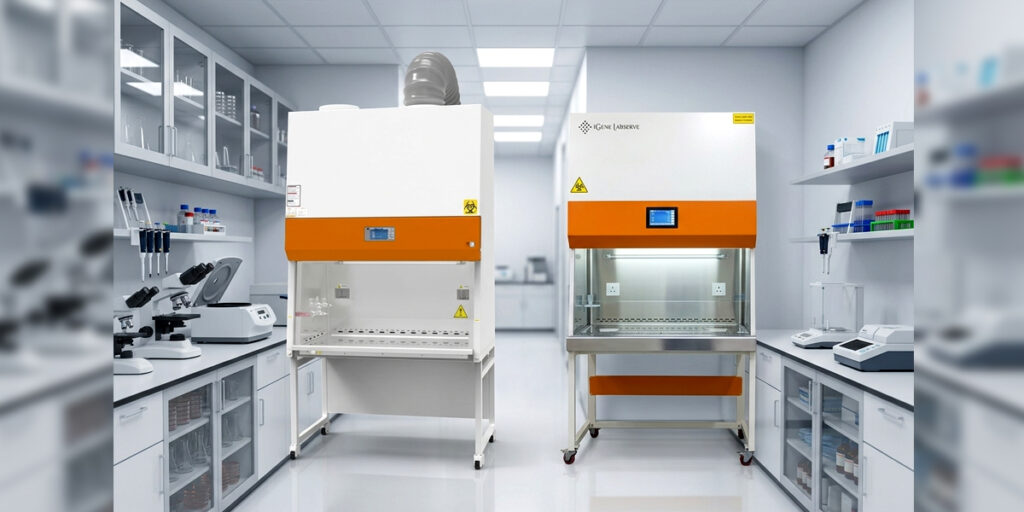
At this level, biosafety cabinets (Class II) are often used to prevent exposure to infectious aerosols.
3. Biosafety level 3 (BSL-3)
BSL-3 labs are designed for handling serious or potentially lethal pathogens that can spread through inhalation.
Common examples include:
- Mycobacterium tuberculosis
- West Nile virus
- Yellow fever virus
Enhanced safety protocols include:
- Controlled and directional airflow
- Sealed laboratory environments
- Medical surveillance for personnel
- Use of specialized PPE such as respirators and protective gowns
Biosafety cabinets play a critical role here by providing a controlled environment for handling infectious materials safely.
4. Biosafety level 4 (BSL-4)
BSL-4 represents the highest level of biosafety containment, reserved for extremely dangerous and exotic pathogens with high fatality rates and no known treatments.
Examples include:
- Ebola virus
- Marburg virus
Strict safety measures include:
- Complete isolation of the facility
- Dedicated air supply and waste management systems
- Full-body, positive-pressure suits
- Mandatory decontamination procedures
These laboratories are rare and typically located in highly secure, specialized facilities.
Why Biosafety Levels Are Important
Biosafety levels (BSL-1 to BSL-4) are essential for protecting laboratory workers, preventing environmental contamination, and ensuring public health safety.
They are widely based on international biosafety standards including WHO and CDC laboratory safety guidelines.
Conclusion
A biosafety level is a set of biocontainment precautions required to isolate hazardous biological agents in a closed laboratory facility.
Understanding the four biosafety levels from BSL-1 to BSL-4 is essential for maintaining safety in biological laboratories. Each level introduces progressively stricter protocols based on the risk posed by the microorganisms being studied. Proper implementation of biosafety levels ensures compliance with global laboratory safety standards and protects both researchers and the environment.
iGene Labserve manufactures high-quality biosafety cabinets designed to meet modern lab requirements. Visit https://www.igenels.com/ to equip your facility with safe and compliant research environments.
FAQs
1. What is the difference between BSL-2 and BSL-3?
BSL-2 handles moderate-risk pathogens with basic containment, while BSL-3 deals with airborne, potentially lethal agents requiring advanced airflow control and stricter safety measures.
2. Why are BSL-4 labs so rare?
Lorem ipsum dolor sit amet, consectetur adipiscing elit. Ut elit tellus, luctus nec ullamcorper mattis, pulvinar dapibus leo.
3. Are biosafety cabinets used in all biosafety levels?
No. Biosafety cabinets are typically used in BSL-2, BSL-3, and BSL-4 labs, but not required in BSL-1 environments.
4. What determines a biosafety level?
Factors such as transmissibility, severity of infection, type of organism, and available treatments determine the appropriate biosafety level.
5. Can a lab operate at multiple biosafety levels?
Yes, some advanced laboratories are designed to handle different biosafety levels depending on the research being conducted.