Table of Contents
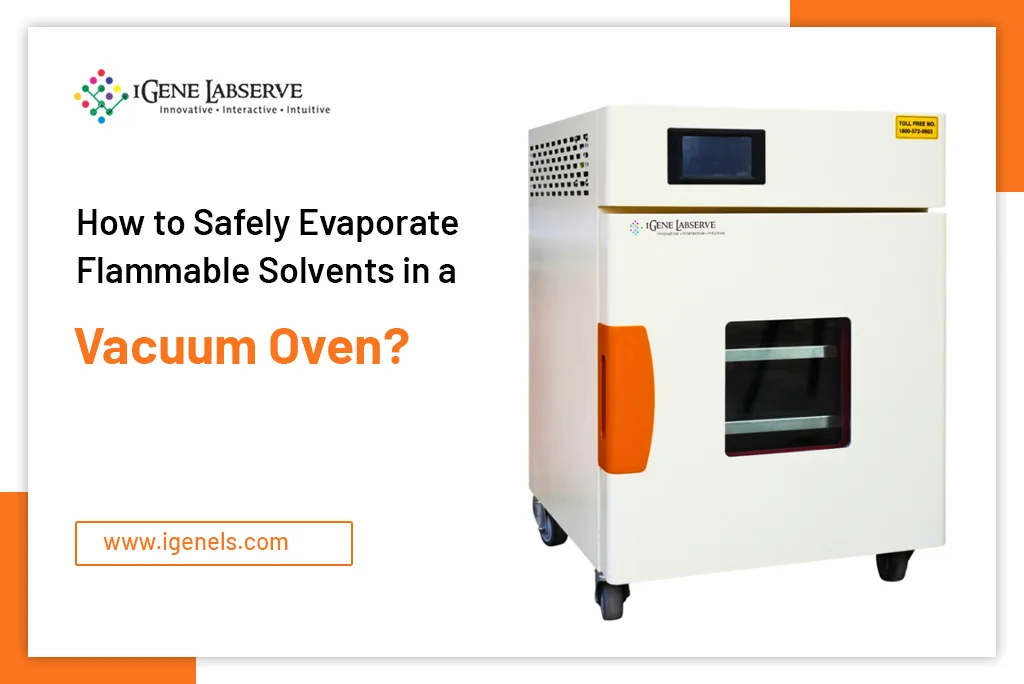
Evaporating flammable solvents in a vacuum oven requires compatible equipment, a thorough risk assessment, and appropriate ways of vapor management. Using a conventional vacuum oven for flammable solvents is a thing to avoid unless the manufacturer provides approval for specific application. To ensure vacuum oven safety, reviewing the Safety Data Sheet of the solvent helps assess its flammability, vapor characteristics as well as verifies the compatibility of the oven, vacuum pump, and the exhaust system. Following manufacturer-approved operating procedures and appropriate safety measures is essential to minimize the chances of fire, explosion, and equipment-related to hazards.
Understanding the Risks of Flammable Solvents
Solvent drying is a common requirement in research, pharmaceutical, chemical, and industrial laboratories. A vacuum oven can help remove moisture or solvents at lower temperatures by reducing pressure inside the chamber. However, using flammable solvents in vacuum oven introduces additional risks. As pressure decreases, solvents tend to evaporate readily thereby generating large quantities of vapour. If the vapour accumulates and comes across a suitable source of ignition, the consequences can be serious.
This is why vacuum oven safety should be considered before starting any solvent-drying process. The suitability of the equipment, solvent and operating conditions all need to be assessed rather than assuming that vacuum drying is automatically safe.
Can you Safely Evaporate Flammable Solvents in a Vacuum Oven?
When it comes to ensuring safety in flammable solvent evaporation, a lot depends on the solvent, equipment design, and conditions of use. A reduction in pressure does not eliminate the flammability of the solvent. In some cases, the situation may go haywire when it increases the rate of evaporation of the solvent and the way vapors move through the system.
A conventional laboratory vacuum oven may not be suitable for flammable solvent evaporation. The manufacturer must explicitly approve the equipment for the intended application and solvent. If the oven is not designed or approved for the process, an alternative drying method or appropriately designed equipment should be considered. The specifications of the manufacturer and laboratory safety procedures should always take precedence over assumptions based on general vacuum-oven operation.
Major Vacuum Oven Hazards
Here are the major vacuum oven hazards to note:
1. Flammable Vapor Accumulation
During solvent drying, vapors may accumulate inside the chamber, vacuum lines or exhaust system if they are not adequately managed. The concentration and movement of vapors depend on factors such as solvent properties, pressure, temperature and ventilation. Proper vapor management is therefore an important part of controlling vacuum oven hazards.
2. Fire and Explosion Risks
Flammable vapors can create a fire or explosion hazard when they come across an appropriate ignition source in the presence of oxygen. Potential sources may include unsuitable electrical components, hot surfaces or other equipment that has not been designed for the application. This makes equipment compatibility particularly important when planning flammable solvent evaporation.
3. Vacuum Pump and Equipment Hazards
Solvent vapors can also affect vacuum pumps and other connected components. An incompatible solvent may damage equipment or create additional hazards within the vacuum system.
The oven, pump, tubing, valves and vapor-handling arrangements should therefore be evaluated as part of the complete setup rather than treated as separate pieces of equipment.
3. Vacuum Pump and Equipment Hazards
Solvent vapors can also affect vacuum pumps and other connected components. An incompatible solvent may damage equipment or create additional hazards within the vacuum system.
The oven, pump, tubing, valves and vapor-handling arrangements should therefore be evaluated as part of the complete setup rather than treated as separate pieces of equipment.
Safety Precautions for Solvent Drying in Vacuum Oven
When it comes to vacuum oven solvent drying, here are the steps to follow:
Verify Equipment Compatibility
Before starting, check the manufacturer’s documentation to confirm whether the vacuum oven is approved for the intended solvent and process. Do not assume that a standard vacuum oven can safely handle flammable materials simply because it operates under reduced pressure.
Review Solvent Properties and SDS
The solvent’s Safety Data Sheet should be reviewed before planning the process. Therefore, you need to check its properties such as flash point, vapor pressure, flammability limits and chemical compatibility. Understanding these characteristics helps identify potential hazards and determine whether the proposed process is appropriate.
Ensure Appropriate Vapor Management
Adequate ventilation and vapor-handling arrangements are essential. The system should be designed to prevent hazardous vapor accumulation and safely manage vapors leaving the chamber.
The exhaust arrangement should also be compatible with the solvent and equipment being used.
Follow Approved Operating Procedures
Follow the manufacturer’s instructions, laboratory risk assessment and established safety procedures for vacuum oven operating precautions. Do not bypass safety features or make unauthorized modifications to the equipment. Temperature, pressure and other operating parameters should only be used within the limits specified for the particular equipment and application.
Implement Appropriate Protective Measures
Personnel should be appropriately trained before operating the system. Suitable PPE, emergency procedures and applicable fire-safety measures should also be in place. If there is uncertainty about the process, you need to consult the laboratory’s safety professional or the equipment manufacturer before proceeding.
Conclusion
Safe flammable solvent evaporation starts long before the oven is switched on. Understanding the solvent, checking equipment compatibility and following approved procedures can help laboratories reduce avoidable risks. Are you looking for reliable laboratory equipment for your research and testing needs? iGene Labserve, one of the Lab equipment suppliers offers laboratory equipment solutions designed to support diverse laboratory requirements. Visit https://www.igenels.com/ Explore its product range and connect with the team to find equipment suited to your specific applications.
Frequently Asked Questions
Not unless the manufacturer explicitly approves the oven for the specific solvent and intended application. Standard vacuum ovens should not automatically be considered suitable for flammable solvents.
Solvent evaporation can generate flammable vapors. If these vapors accumulate and encounter an ignition source, they can create a fire or explosion hazard.
Important precautions include checking equipment compatibility, reviewing the solvent SDS, managing vapors appropriately, conducting a risk assessment and following manufacturer-approved operating procedures.
Suitability depends on the solvent, process requirements and equipment design. Only equipment with documented approval for the intended application should be considered.
That depends on the pump design and the solvent involved. The manufacturer’s guidance should be followed, and appropriate vapor-management measures should be considered for the complete vacuum system.