
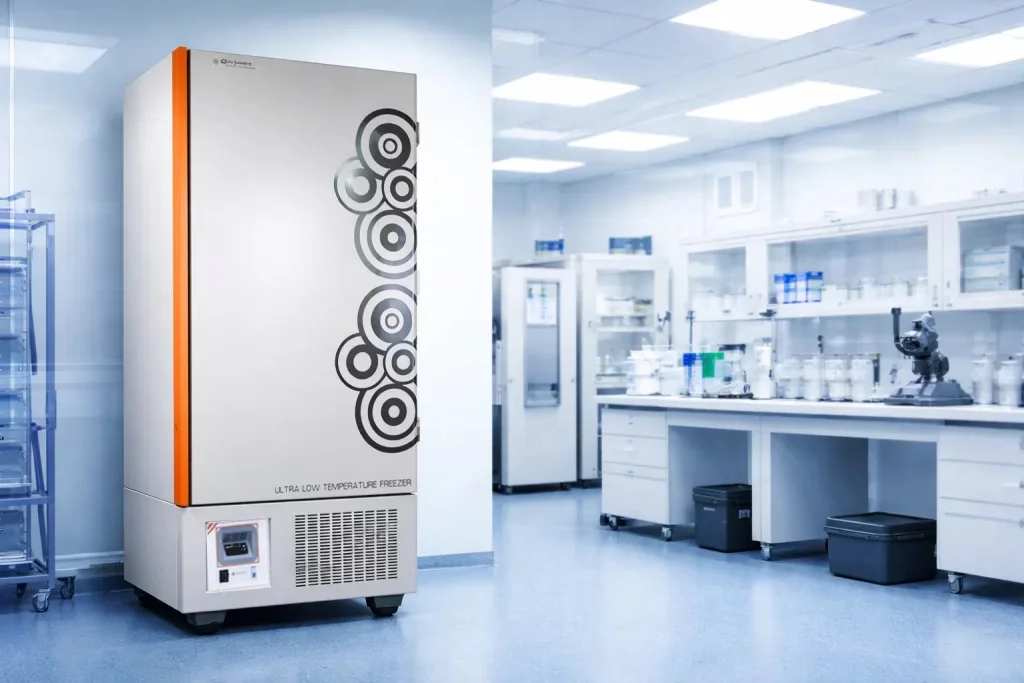
Ultra Low Temperature or ULT freezers play a crucial role in laboratories, hospitals, and research facilities across the world. They are designed to maintain a temperature range of -40 degrees Celsius and -80 degrees Celsius and preserve highly sensitive chemical samples and biological samples that would degrade at standard freezing temperatures. These samples are usually DNA, RNA, vaccines, viral cultures, enzymes, cell lines, and long-term clinical specimens.
Table of Contents
Why Ultra-Low Temperature Storage is Essential?
Many biological materials are extremely sensitive to temperature fluctuations. At higher temperatures, enzymatic activity, oxidation, and microbial growth can alter or destroy samples. An ultra low temperature freezer slows down molecular motion, preserving the structural and functional integrity of samples for months or even years.
Industries such as biotechnology, pharmaceuticals, diagnostics, and academic research rely on ULT freezers to meet international storage standards.
Biological Samples That Require Ultra-Low Temperature Freezers
1. DNA and RNA Samples
When it comes to biological sample storage, ULT freezers are essential for DNA and RNA is highly prone to degradation, especially RNA, which is extremely unstable. Ultra-low temperatures prevent enzymatic breakdown, making ULT freezers essential for:
- Genomics research
- Molecular diagnostics
- Genetic sequencing
- Forensic analysis
• Cell Lines and Stem Cells
Living cells, including mammalian cell lines and stem cells, must be preserved in ultra-low conditions to maintain viability. These samples are commonly stored with cryoprotectants and require stable temperatures to support:
- Cancer research
- Regenerative medicine
- Drug development
- Vaccine research
• Viral and Bacterial Cultures
ULT freezers are critical for storing viral strains and bacterial cultures, particularly in microbiology and infectious disease research. Consistent ultra-low temperatures help prevent mutations and loss of infectivity, ensuring reliable results in:
- Virology labs
- Epidemiological studies
- Vaccine development programs
• Plasma, Serum, and Blood Components
Laboratory cold storage samples such as plasma, serum, and blood derivatives require ultra-low storage for long-term use. These samples are commonly used in:
- Diagnostic testing
- Clinical trials
- Transfusion research
2. Tissue and Biopsy Samples
Human and animal tissue samples are often stored at ultra-low temperatures to preserve proteins, enzymes, and cellular structure. Biobanks and research hospitals depend on ULT freezers for:
- Oncology research
- Pathology studies
- Personalized medicine initiatives
3. Vaccines and Biologics
Many vaccines, biologics, and monoclonal antibodies require ultra-low temperature freezer storage to remain effective. Temperature deviations can reduce potency and shelf life, making ULT freezers essential for:
- Vaccine manufacturing
- Pharmaceutical R&D
- Cold-chain logistics
4. Enzymes and Proteins
Sensitive enzymes and purified proteins lose activity at higher temperatures. Ultra-low storage helps maintain stability and functionality, especially for long-term experiments and batch testing.
Conclusion
Ultra-low temperature freezers are essential for preserving samples that demand maximum stability. Choosing the right storage conditions protects valuable samples, supports accurate research outcomes, and ensures compliance with global laboratory standards. Partner with iGene Labserve for reliable ultra-low temperature freezers and laboratory storage solutions. Visit iGene Labserve to get a freezer for your lab.
FAQs
1. Which samples require ultra-low temperature freezer storage?
Samples such as DNA, RNA, cell lines, stem cells, vaccines, viral cultures, enzymes, plasma, serum, and tissue samples require ultra-low temperature freezer storage to preserve integrity and viability
2. Why can’t standard laboratory freezers store these samples?
Standard laboratory freezers operate around –20°C, which is insufficient to stop enzymatic activity and molecular degradation in sensitive samples. Ultra-low temperatures significantly slow these processes.
3. Do vaccines need ultra-low temperature storage?
Yes, many vaccines and biologics require ultra-low temperature storage to maintain potency, safety, and shelf life, especially during long-term storage or research phases.
4. How long can samples be stored in an ultra-low temperature freezer?
Depending on the sample type and storage conditions, samples can be stored for months to several years without significant degradation when maintained at consistent ultra-low temperatures.