Table of Contents
In laboratories, pharmaceutical companies, research facilities, and educational institutions, measuring light absorption and color intensity accurately play a crucial role when obtaining reliable results. Now, two of the most used devices used to analyze samples using light are spectrophotometer and colorimeter. When it comes to spectrophotometer vs. colorimeter, both are used for analyzing samples using light, they differ significantly in terms of accuracy, functionality, and applications.
What is a Spectrophotometer?
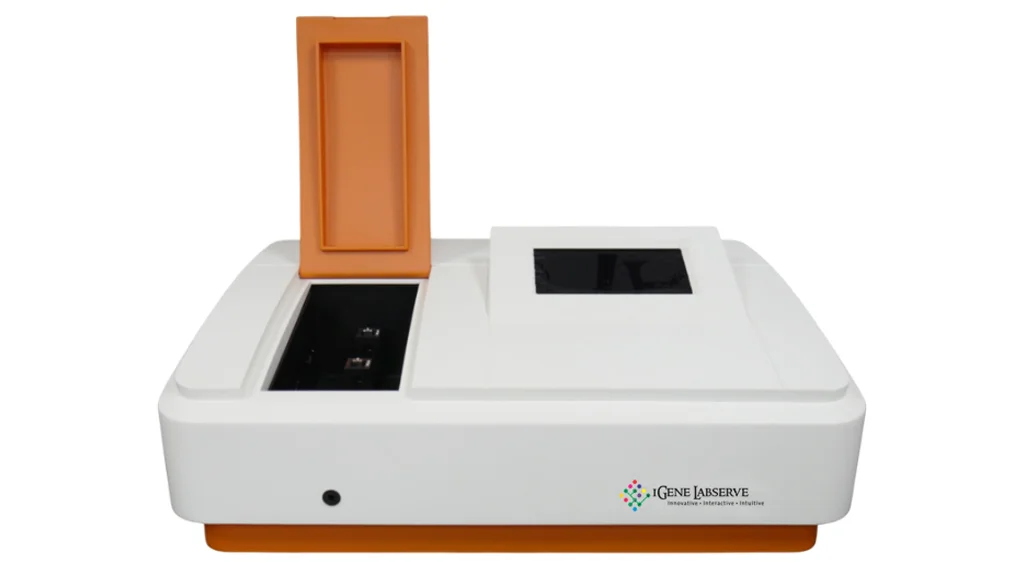
A spectrophotometer is a more advanced analytical instrument that measures the intensity of light across a broad range of wavelengths. Instead of using filters, it employs a monochromator such as a prism or diffraction grating to isolate specific wavelengths with greater precision.
Spectrophotometers are commonly used in pharmaceutical research, biotechnology, environmental testing, clinical diagnostics, and advanced scientific studies. Their ability to analyze multiple wavelengths makes them highly accurate and versatile.
Key Features of a Spectrophotometer
- Uses a monochromator for wavelength selection
- Measures absorbance, transmittance, and reflectance
- Offers higher accuracy and sensitivity
- Covers a wider wavelength range
- Suitable for advanced laboratory applications
A double beam spectrophotometer splits the light source into two separate paths; one that passes through the sample and the other passes through a reference or blank sample. Double beam spectrophotometers are widely used in pharmaceutical, clinical, and research laboratories for precise analytical applications.
What is a Colorimeter?
A colorimeter is an analytical instrument used to determine the concentration of a substance by measuring the amount of light absorbed by a colored solution. It typically uses colored filters to isolate specific wavelengths of light and measures the intensity of light passing through the sample.
Colorimeters are widely used in educational laboratories, water quality testing, food processing, and routine chemical analysis. Their simple operation and cost-effectiveness make them suitable for basic testing applications where high precision is not critical.
Key Features of a Colorimeter
- Uses colored optical filters
- Measures absorbance or transmittance at selected wavelengths
- Simple and easy to operate
- Suitable for routine analysis
- Generally more affordable than spectrophotometers
Spectrophotometer vs. Colorimeter: Key Differences
Here is what you come to know when sorting the difference between spectrophotometer and colorimeter:
1. Wavelength Selection
The primary difference lies in how the instruments select light wavelengths.
A colorimeter uses optical filters that allow only specific wavelength ranges to pass through. In contrast, a spectrophotometer uses a monochromator, enabling precise selection of individual wavelengths.
As a result, spectrophotometers provide more detailed and accurate measurements.
2. Accuracy and Sensitivity
Spectrophotometers generally deliver higher accuracy and sensitivity because they can analyze light across a broader spectrum. This capability is especially important in applications requiring detailed chemical analysis and research.
Colorimeters, while reliable for routine testing, may not provide the same level of precision for complex analyses.
3. Wavelength Range
Colorimeters typically operate within the visible light spectrum.
Spectrophotometers can measure across ultraviolet (UV), visible (VIS), and infrared (IR) regions, depending on the model. This wider range allows them to analyze a greater variety of samples and compounds.
4. Applications
Colorimeters are often used for:
- Water quality testing
- Food and beverage analysis
- Educational laboratory experiments
- Routine chemical testing
Spectrophotometers are commonly used for:
- Pharmaceutical analysis
- DNA and protein quantification
- Clinical diagnostics
- Environmental monitoring
- Biotechnology research
5. Cost
Colorimeters are generally less expensive and easier to maintain, making them ideal for laboratories with basic testing needs.
Spectrophotometers require a larger investment but offer greater functionality, versatility, and long-term value for advanced applications.
Which Instrument should you Choose?
The choice between a spectrophotometer and a colorimeter depends on your laboratory’s requirements.
Choose a colorimeter if your work involves routine measurements, educational applications, or basic quality control testing.
Choose a spectrophotometer when you require high precision, broader wavelength analysis, or advanced research capabilities, a spectrophotometer is the better option. Its enhanced accuracy and versatility make it an essential tool for modern laboratories and scientific institutions.
Final Thoughts
By understanding the differences between these instruments, laboratories can make informed purchasing decisions and ensure they select the most suitable solution for their analytical needs. iGene Labserve, one of the best lab equipment suppliers offers advanced spectrophotometers designed to deliver accurate, reliable, and consistent results for research, diagnostics, and quality control applications.
Frequently Asked Questions
A spectrophotometer measures light intensity across a wide range of wavelengths, while a colorimeter uses filters to measure light absorption at specific wavelengths. Spectrophotometers generally provide greater accuracy and versatility.
A spectrophotometer is typically more accurate because it can analyze multiple wavelengths with high precision, making it suitable for advanced research and laboratory applications.
Spectrophotometers are widely used for DNA and protein analysis, pharmaceutical testing, environmental monitoring, clinical diagnostics, and quality control in research laboratories.
A colorimeter is a good choice for routine testing, educational laboratories, water quality analysis, and applications where basic color measurement and affordability are the primary requirements.
The key factors include wavelength range, accuracy, sample volume requirements, application type, ease of use, software capabilities, and whether a single-beam, double-beam, or microvolume spectrophotometer best suits your laboratory needs.